

Valplast Partials

Flexible nylon partials with tissue-toned clasps — a comfortable, metal-free option for esthetic-zone cases on well-supported spans.

Valplast is the flexible partial many dentists reach for when a metal clasp would ruin the esthetics. On small to moderate, well-supported spans, a thin tissue-colored nylon base with clasps that blend into the gingiva is often exactly what the case is asking for.

Jahn De Khudikine, Founder · Universal Dental Lab
Jahn De Khudikine Founder · Universal Dental Lab

Why send it here

Valplast that loses retention in six months was clasped wrong. We survey for long-term flex, not just insertion.

A practice's schedule lives or dies by the lab — I've watched one late case push back a whole day of chair time.

So I still know the cases moving through this lab, and I answer for how each one is made. Send a case here and it doesn't drop into a queue — it lands with me and one technician who carries it start to finish.

Start a case
Metal-free
Tissue-toned nylon clasps that blend at the gingival margin — no metal in the smile Injection-processed nylon flexes into soft-tissue undercuts
Survey for flex retention
Undercuts and clasp path reviewed before processing — nylon is not reprinted like a digital file Adjustments stay within what flexible polyamide tolerates at the bench
Your technician
One person holds your case Reach them directly — no call-center queue
Free scanner
3Shape TRIOS 6 for partners Go fully digital at no cost

Material Comparison

Valplast, Printed Flexible, or Acetal?

Three metal-free routes with different handling and rigidity. We make all three — esthetics, adjustability, and workflow decide it.

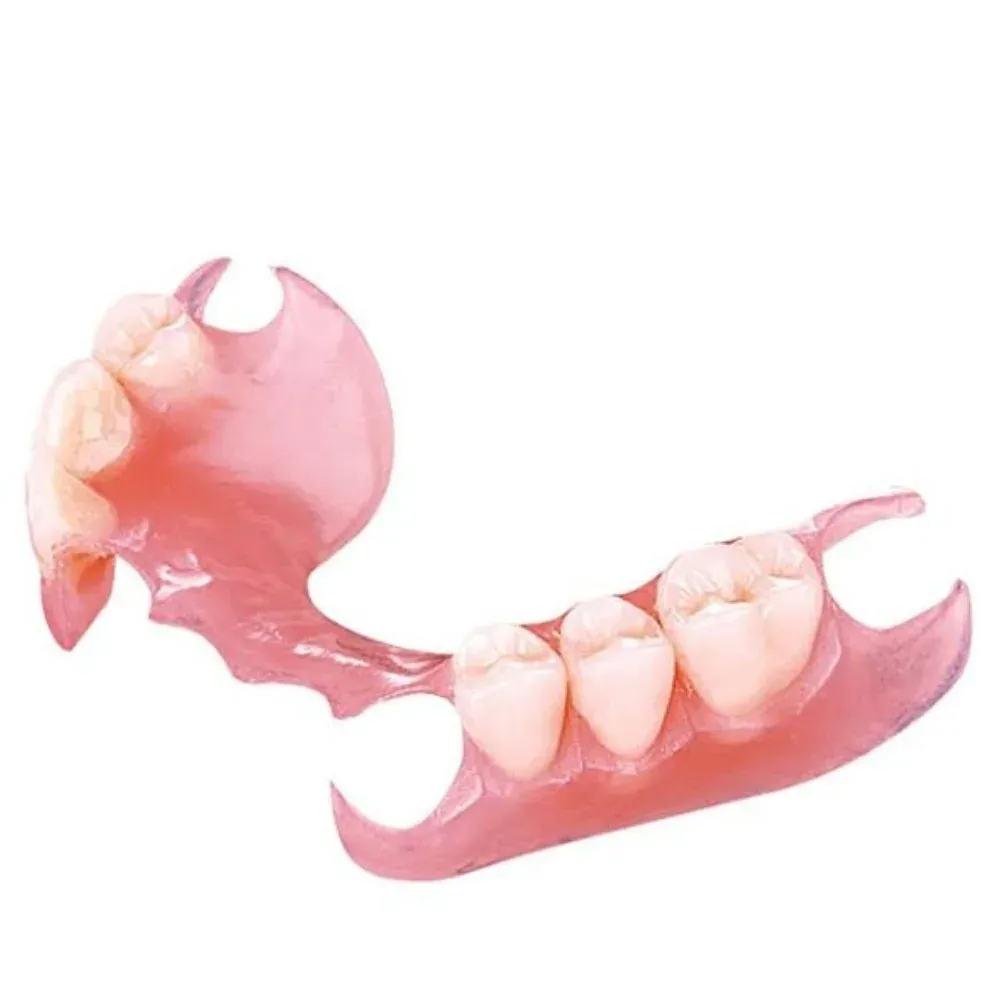
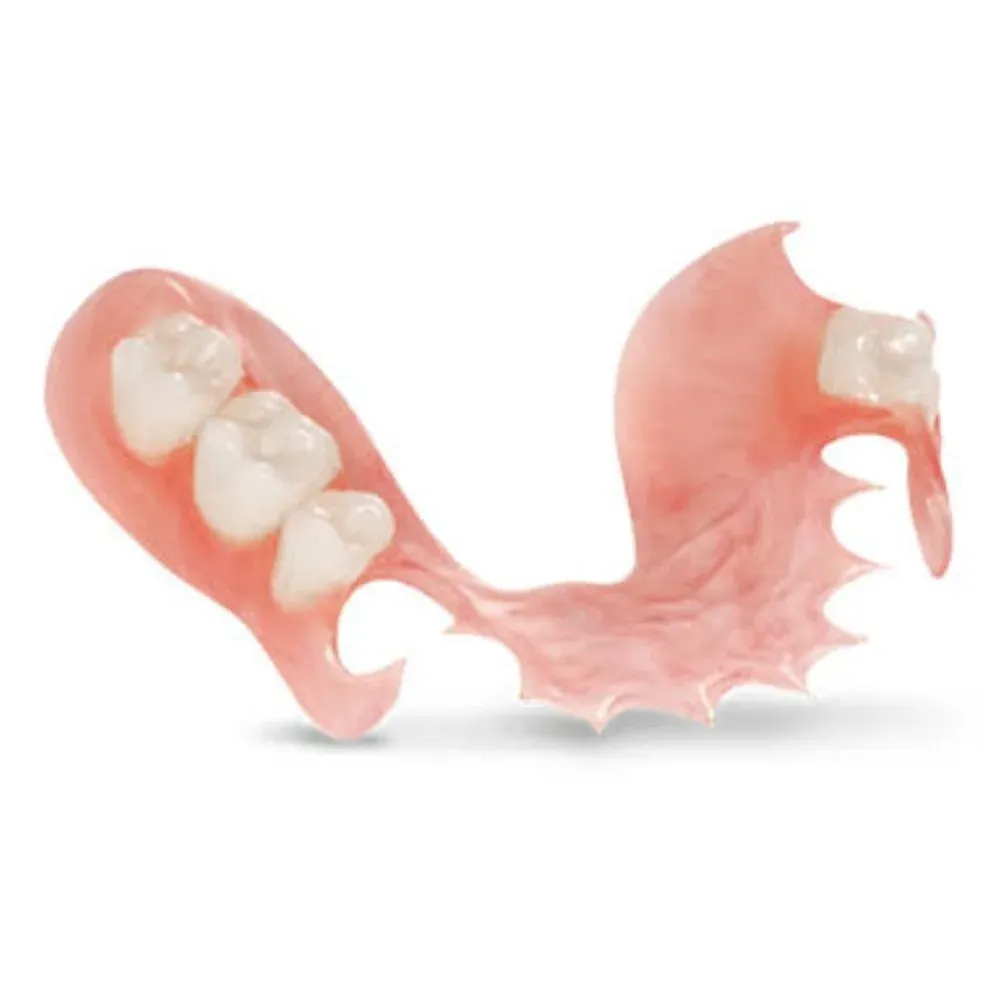
Valplast flexible nylon partial with tissue-toned clasps
Valplast Partials You are here
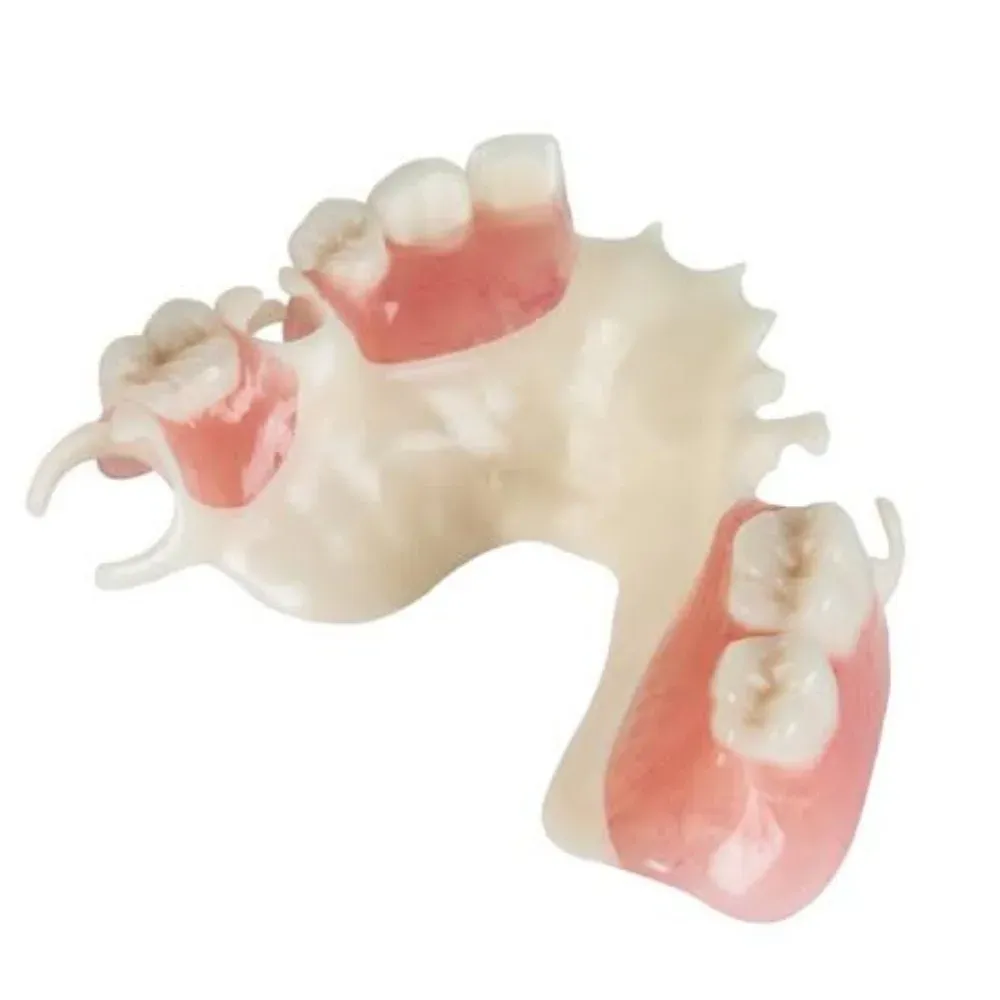
Printed flexible resin partial on the model
Flexible 3D Partials
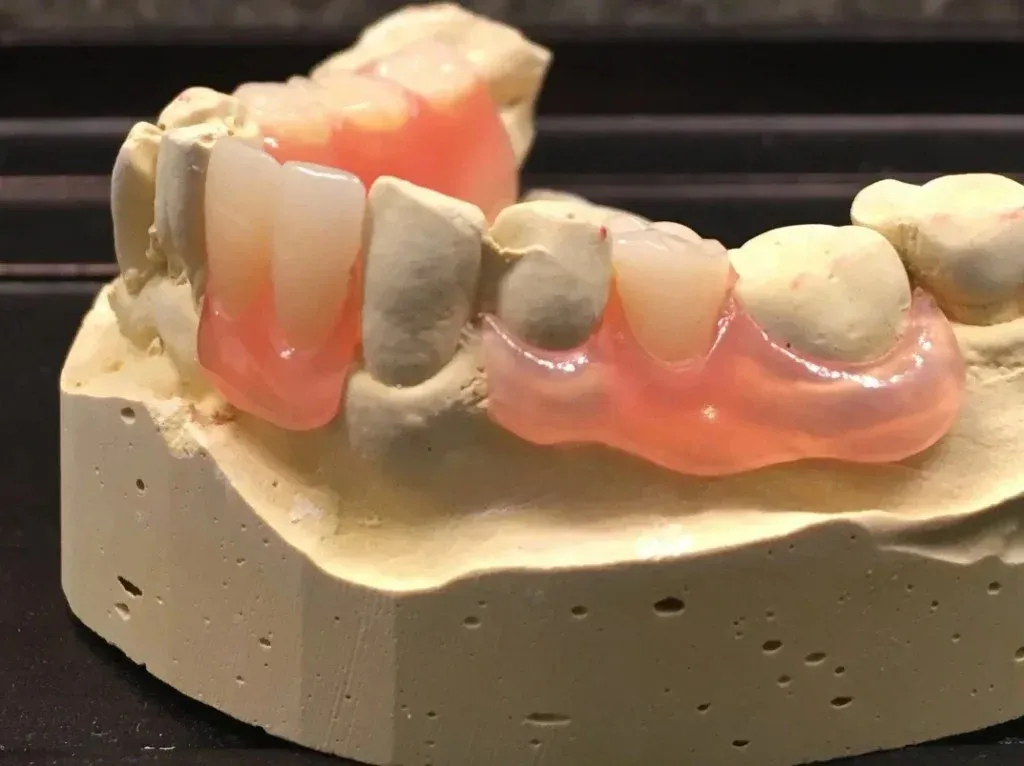
Acetal resin partial framework, tooth-colored clasp
Acetal Resin Partials
Material Injected nylon (polyamide) 3D-printed flexible resin Acetal (POM) resin
Rigidity Flexible primarily tissue-borne Flexible Semi-rigid firmer than nylon
Best for Esthetic clasps, an established flexible material Digital workflow, reprintable from file Firmer metal-free clasps

Flexible-material behavior and case suitability depend on the span, undercuts, and support of the specific case. Confirm case-specific requirements with the lab before you take the master impression.

Material
Flexible nylon (polyamide)
Rigidity
Flexible, tissue-borne
Clasps
Tissue-toned, metal-free
Turnaround
Quoted per case at intake
Valplast flexible nylon partial with tissue-toned clasps

Overview

Flexible Nylon, No Metal in the Smile

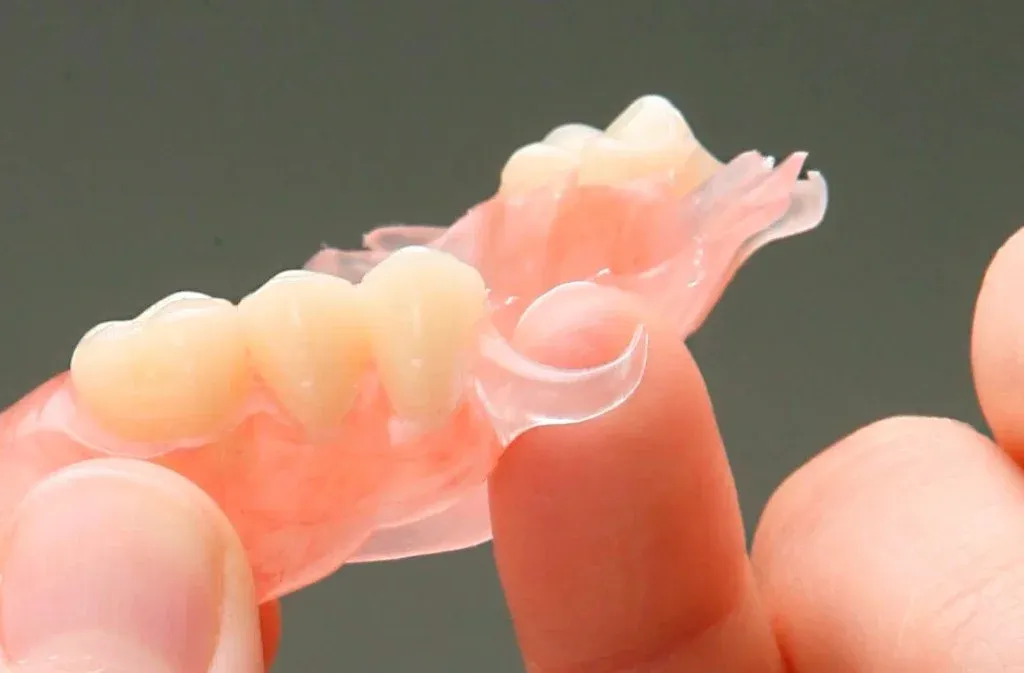
Valplast is the flexible partial many dentists reach for when a metal clasp would ruin the esthetics. A thin, tissue-colored nylon base with clasps that blend into the gingiva makes the partial hard to spot in the mouth.

The material has a clear lane. It is at its best on small to moderate, well-supported spans; it is not the choice for a long distal extension that needs rigid, rest-borne support — that belongs to a cast framework.

  • Tissue-borne retention: The flexible nylon flexes to engage soft-tissue and tooth undercuts, so there is no metal to show.

  • Comfort and weight: Thin, light, and biocompatible — commonly well tolerated for daily wear.
Learn more
A technician finishing a flexible nylon partial at the bench

At the Bench

Injected, Surveyed, Finished for Flex Retention

The partial is injection-processed in flexible nylon after the survey confirms undercuts and clasp paths that nylon can hold long term. At the bench, finish is kept within what polyamide tolerates — major clasp or base changes mean reprocessing, not a quick grind-and-go like a printed reprint.

  • Survey before inject: Undercuts and esthetic clasp placement are settled before processing — nylon retention depends on the survey, not a later tweak.

  • Bench adjust limits: Minor polish and relief only; structural clasp moves are flagged when they exceed what injected nylon can safely take.

  • Occlusion verified: Checked against the opposing model before anything ships.

Learn more

Before you prescribe

Nylon is harder to reline and add to than acrylic. Where the ridge is expected to change or additions are likely, weigh that before you prescribe a flexible base — an acetal or cast partial may age better in that mouth.

Case Selection

When Valplast Is the Right Call

Indicated for

  • Esthetic-zone partials where a metal clasp would be a deal-breaker
  • Small to moderate, well-supported spans and unilateral cases
  • Patients with soft-tissue undercuts a flexible base can engage for retention
  • Cases needing a lightweight, comfortable removable option
  • Patients with sensitivities to certain denture-base monomers who tolerate nylon

Consider an alternative when

  • The case is a long distal extension that needs rigid, rest-borne support — choose a cast framework
  • The patient is a heavy bruxer or the occlusion loads the partial hard
  • Frequent relines or additions are expected — nylon is difficult to reline and adjust
  • A firmer metal-free clasp is preferred — an acetal resin partial may suit better

Specifications

Valplast Partial Specifications

Material, esthetics, and record data for planning the partial chairside.

Typical parameters for the flexible nylon partials we process.
Material Valplast — a flexible thermoplastic nylon (polyamide) denture base, injection-processed
Esthetics Tissue-colored base and clasps that blend into the gingiva; no metal to display in the smile
Rigidity Flexible and primarily tissue-borne; the nylon flexes to engage undercuts for retention
Comfort & weight Thin, light, and biocompatible; commonly well tolerated for daily wear
Clasp design Flexible nylon clasps that hug soft-tissue and tooth undercuts rather than cast metal arms
Adjustment & repair Nylon is more difficult to reline, adjust, and add to than acrylic — plan future changes with that in mind
Best spans Small to moderate, well-supported spans; not indicated for long distal extensions needing rigid support
Records Master impression or intraoral scan, opposing arch, bite registration, and shade
Restoration types Flexible removable partial dentures, maxillary and mandibular
Turnaround Quoted per case at intake

Flexible nylon behavior and suitability depend on the span, undercuts, and support of the specific case. Confirm case-specific requirements with the lab before you take the master impression.

Case Submission

Sending a Valplast Case

We accept scans from all major intraoral systems, including iTero, 3Shape, and Medit — or a master impression, which many practices still prefer for partials.

Include with the case:

  • Master impression or STL of the arch and the opposing arch
  • Bite registration
  • Shade for the base and denture teeth
  • The span and teeth being replaced
  • Any esthetic priority for clasp positioning

Because retention depends on undercuts, a record that captures them clearly is what keeps the partial seating and staying put. New to the lab? Open an account and we will walk you through the first case.

Start a case

Send one case. Keep the scanner.

Open a partner account and your first case moves with a shade record and our remake guarantee — if a unit does not seat, we redo it at no charge.

  • Free 3Shape TRIOS 6 scanner for active partners
  • Under-2% remake rate — remakes at no charge
  • One named technician you reach directly — no call center

Prefer to talk? +1 747-268-0808

No call center — you hear back from the lab, not a bot.

Valplast FAQ

Valplast Partials — Questions Dentists Ask

Valplast suits short-to-moderate spans where soft-tissue and tooth undercuts can retain a flexible nylon base and you want metal-free, tissue-toned clasps. It is a poor candidate for a long distal extension or a heavy bite — those cases feel unstable and belong on a firmer acetal or a cast framework. We will say so before you commit.

Injection-processed nylon does not grind and polish like acrylic. Small tweaks are possible; major seat or clasp changes often mean remaking. Getting undercuts and span right in the lab matters more than usual — we review the record for adequate, well-defined undercuts before processing.

Valplast is the classic injection nylon workflow. A printed flexible partial is designed in CAD and archived as a file, so a lost appliance can be reprinted. If reprintability and a fully digital path matter, lean printed; if you want the established Valplast material habit, stay with Valplast. We can advise from a diagnostic scan.

Relines and additions are more involved with nylon than with acrylic — that is a maintenance consideration, not just a turnaround one. If you expect frequent adjustments or staged tooth additions, acrylic or a cast framework with acrylic saddles is usually the kinder long-term choice.

Send a master impression or scan of both arches, a bite, and shades for base and teeth. Because retention relies on soft-tissue and tooth undercuts, the record must capture those undercuts clearly. Flag where esthetics is the priority so we hide tissue-toned clasps.

How to send a file

Switching labs, de-risked

New to us? We review every Valplast record for adequate undercuts before processing and tell you up front when a case is a poor candidate — because a flexible base fights its own instability when the span is wrong.

Partner Offer

A Free Intraoral Scanner for Partner Practices

Partner with Universal Dental Lab and we place a 3Shape TRIOS 6 Wireless in your operatory — free for the length of our partnership. Scan the prep, send it in seconds, and skip impressions entirely.