

Full Cast Gold Crowns

The longevity standard dentists fall back on for posterior teeth — conservative reduction, a margin that adapts, and wear that is kind to the tooth it bites against.

No material has a longer clinical track record than cast gold. For a second molar, a bruxer, or a tooth with minimal clearance, it stays the restoration other materials are measured against — where the tooth does not show.

Jahn De Khudikine, Founder · Universal Dental Lab
Jahn De Khudikine Founder · Universal Dental Lab

Why send it here

Minimal clearance and a kind antagonist — that is why gold still gets cast here.

A practice's schedule lives or dies by the lab — I've watched one late case push back a whole day of chair time.

So I still know the cases moving through this lab, and I answer for how each one is made. Send a case here and it doesn't drop into a queue — it lands with me and one technician who carries it start to finish.

Start a case
Wears like enamel
Kind to the opposing dentition — gold protects the antagonist instead of grinding it down The call when clearance is minimal and load is heavy
Margin burnish
Lost-wax cast gold finished and adapted at the finish line on the die Occlusion verified on the articulated model before ship
Your technician
One person holds your case Reach them directly — no call-center queue
Free scanner
3Shape TRIOS 6 for partners Go fully digital at no cost

Material Comparison

Gold, Base Metal, or Zirconia?

For a posterior unit, the choice usually comes down to wear behavior, cost, and whether the tooth shows. We make all three.

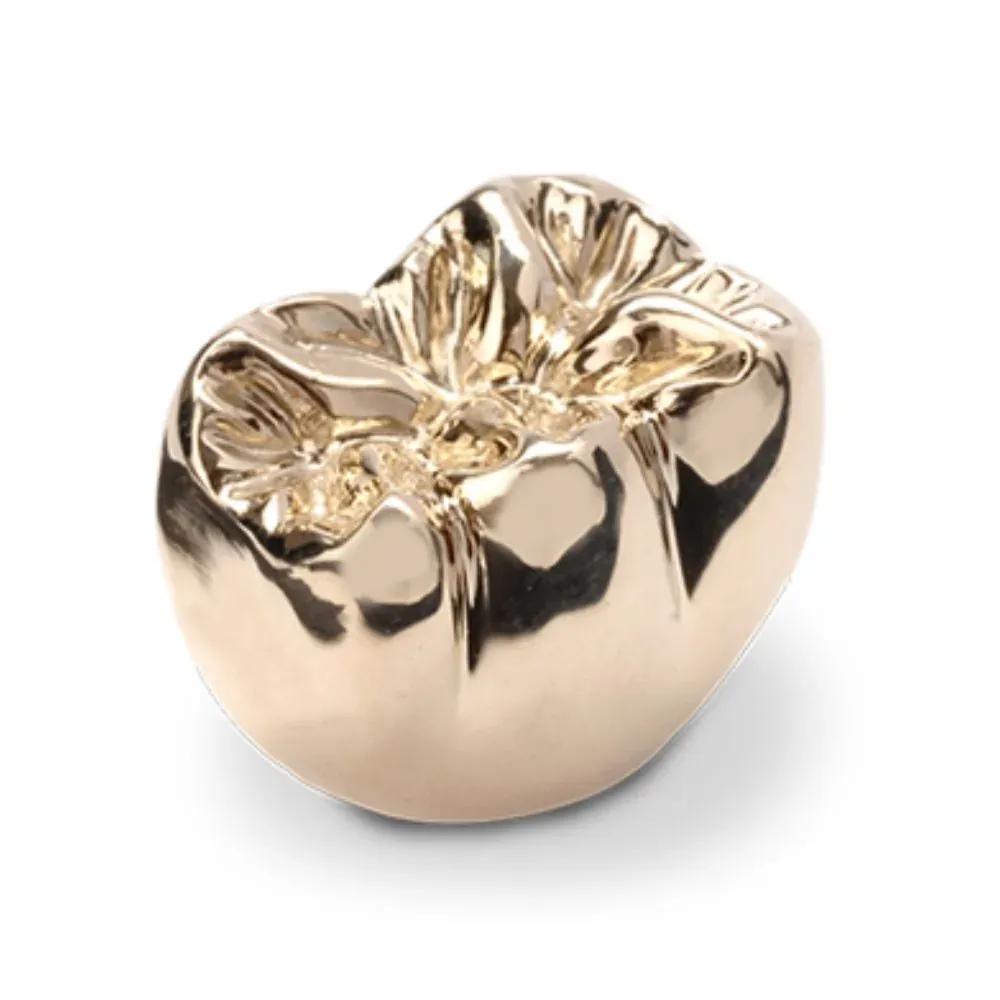
Full cast gold crown polished to a high luster on the die
Full Cast Gold Crowns You are here
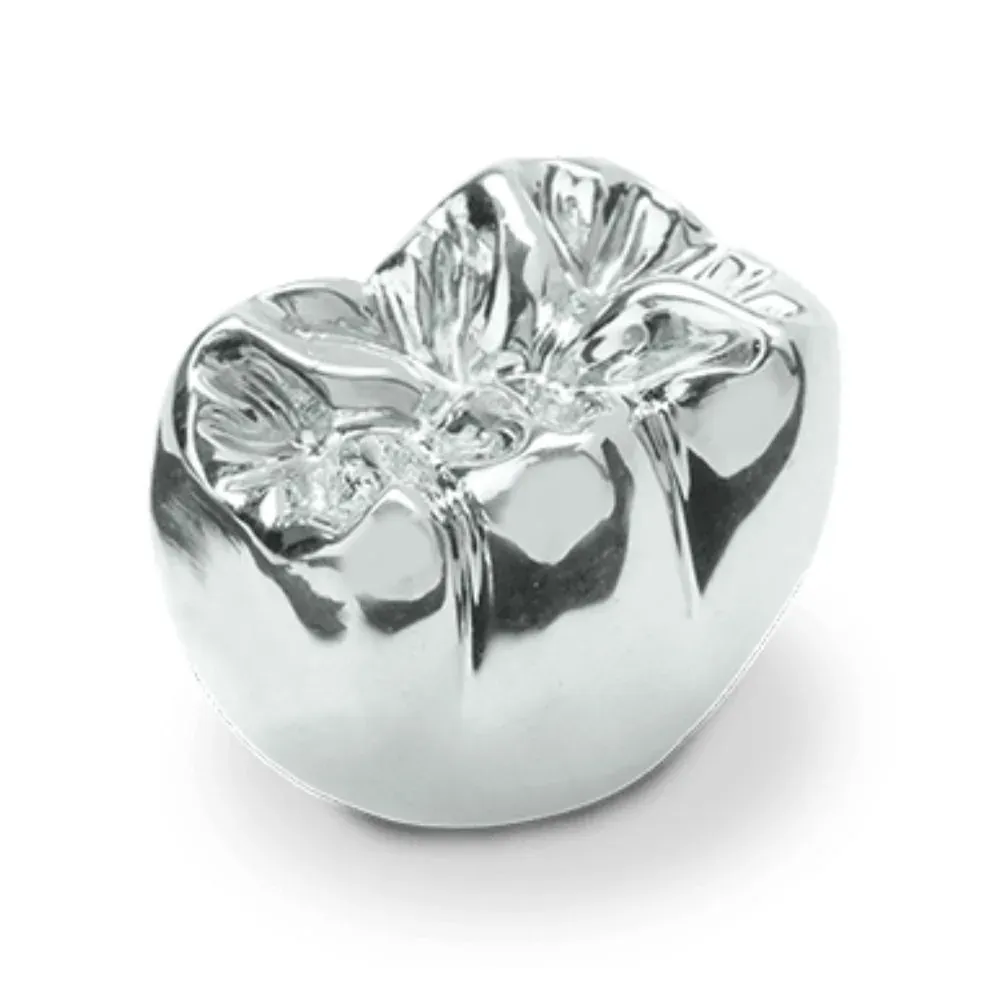
Base-metal alloy crown on the master model
Non-Precious Metal Crowns
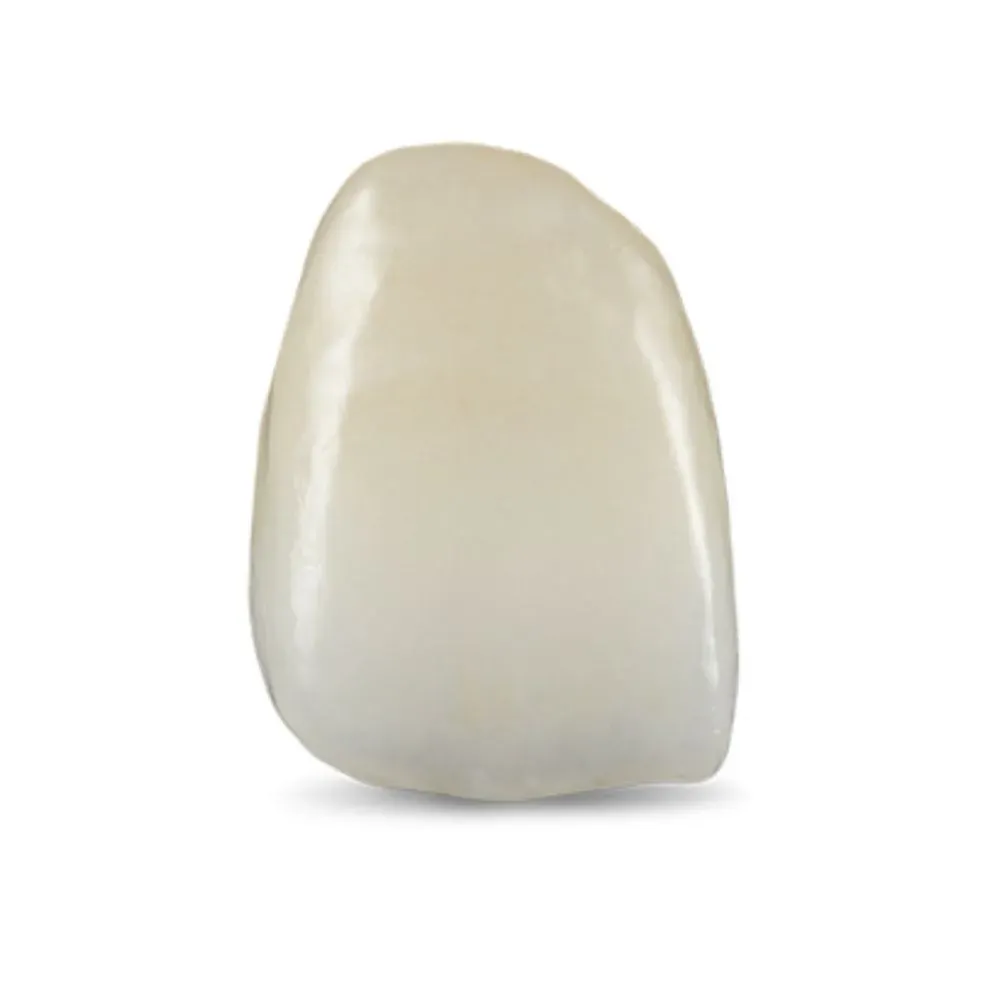
Monolithic zirconia crown on the master model
Zirconia Crowns
Material High-noble / noble alloy Base-metal alloy Monolithic zirconia
Opposing wear Gentle wears near enamel Harder than gold Low when polished
Best for Longevity, minimal clearance, bruxers Economical posterior metal units Tooth-colored strength, load, bridges

Wear behavior is typical guidance for these materials and varies with the specific alloy, finish, and case. Confirm case-specific requirements with the lab before you prep.

Material
High-noble / noble gold alloy
Occlusal reduction
0.5–1.0 mm (conservative)
Opposing wear
Near enamel
Turnaround
Quoted per case at intake
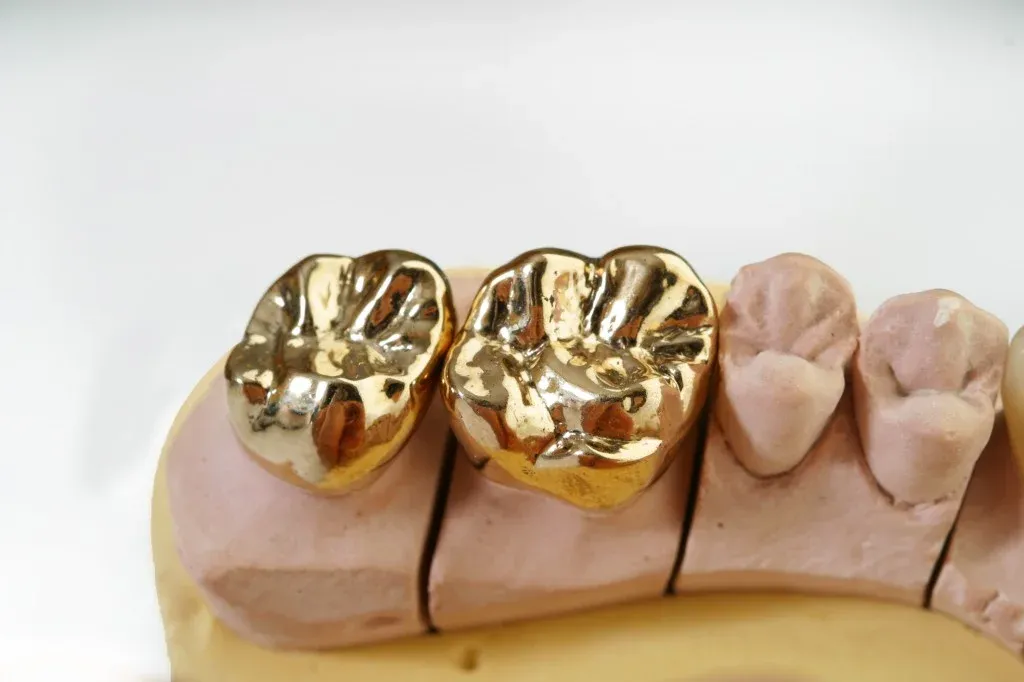
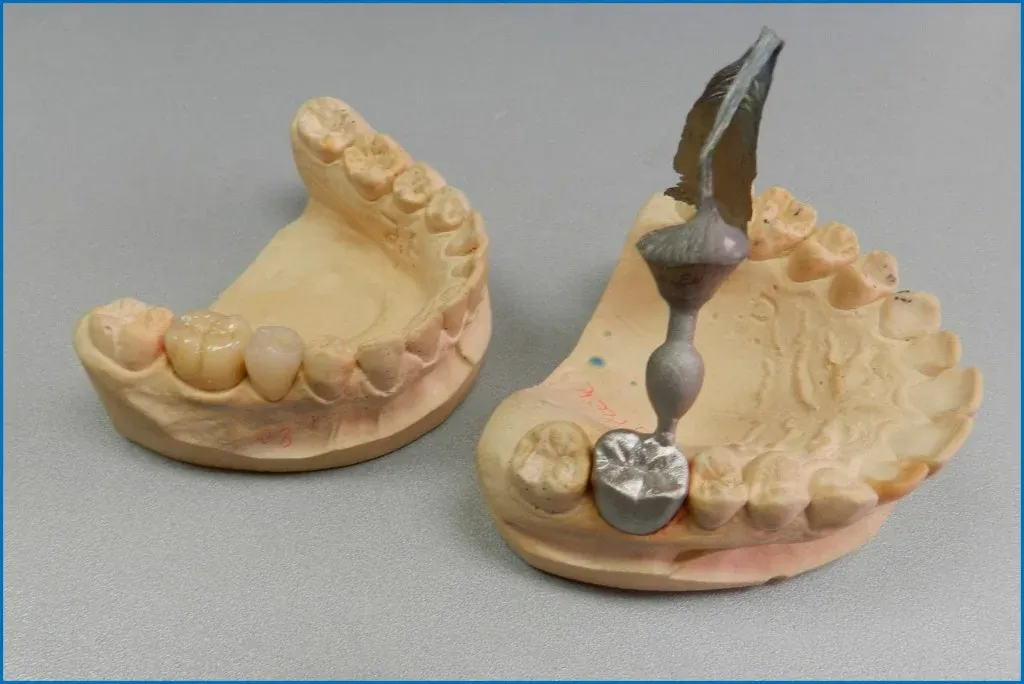
A full cast gold crown seated on a posterior second molar

Overview

Still the Benchmark for a Loaded Posterior Tooth

No material has a longer clinical track record than cast gold. For a second molar, a bruxer, or a tooth with minimal clearance, full cast gold crowns remain the restoration other materials are measured against.

The one thing gold does not do is disappear. It is unmistakably metal, so it belongs on non-esthetic posterior teeth where function outweighs appearance — but where it does, it is often the most conservative, most durable option on the tray.

  • Conservative reduction: Gold performs in thin section, so the prep takes roughly 0.5–1.0 mm — less than a ceramic wants.

  • Kind at the margin: It burnishes and adapts, and wears close to enamel instead of grinding down the opposing tooth.
Learn more
A castable pattern being invested for lost-wax gold casting

At the Bench

Cast Thin, Burnish the Margin, Verify the Bite

The pattern is waxed or milled for lost-wax casting in the gold alloy on the prescription. After pour and devest, the crown is finished on the die with emphasis on margin adaptation — cast gold burnishes rather than fights a fine line — then occlusion is set with the opposing dentition in mind.

  • Margin burnish: Adapted on the die — gold’s ability to burnish at the finish line is checked before the unit leaves the bench.

  • Opposing wear: Contacts and occlusion are verified on the articulator with kindness to natural enamel in mind, not only “high or low.”

  • Thin-section cast: Fit confirmed where reduction is conservative — gold is expected to perform in the minimal clearance you prepped.

Learn more

Before you cement

Full cast gold seats with conventional cements — glass ionomer, resin-modified glass ionomer, or zinc phosphate. Retention comes from the preparation, not an adhesive bond, so a well-tapered prep with adequate height does the work.

Case Selection

When Full Cast Gold Is the Right Call

Indicated for

  • Second molars and non-esthetic posterior units where longevity leads
  • Bruxers and patients with heavy occlusal load
  • Cases with minimal occlusal clearance — gold performs thin where ceramic cannot
  • Full cast crowns and onlays where kindness to the opposing dentition matters
  • Patients who value durability over a tooth-colored result

Consider an alternative when

  • The tooth is visible in the smile line and esthetics drive the case — choose a tooth-colored material
  • Cost is the overriding constraint and a base-metal alloy will do — see non-precious metal
  • The patient specifically wants a metal-free restoration
  • A layered or monolithic ceramic better matches the treatment plan

Specifications

Full Cast Gold Crown Specifications

Preparation, alloy, and cementation data for planning the case chairside.

Typical parameters for the cast gold crowns we produce.
Material High-noble or noble gold alloy, produced by lost-wax investment casting
Strength & wear Excellent longevity; wears at a rate similar to enamel, so it is kind to the opposing dentition rather than abrading it
Occlusal reduction Conservative — roughly 0.5–1.0 mm occlusally, less than ceramic requires because gold performs in thin section
Axial reduction 0.5–1.0 mm
Margin design Chamfer, and gold tolerates a fine or feather-edge margin better than brittle ceramics
Cementation Conventional cements (glass ionomer, resin-modified glass ionomer, or zinc phosphate); retention comes from the preparation
Marginal fit Cast gold burnishes and adapts closely at the margin — a long-recognized strength of the material
Restoration types Full cast single crowns and onlays, posterior
Turnaround Quoted per case at intake

Reduction and wear characteristics are typical guidance for cast high-noble alloys and vary with the specific alloy and case. Confirm case-specific requirements with the lab before you prep.

Case Submission

Sending a Full Cast Gold Case

We accept scans from all major intraoral systems, including iTero, 3Shape, and Medit — or a conventional impression, which suits a full cast case well.

Include with the case:

  • STL or impression of the prepped arch and the opposing arch
  • Bite registration
  • Alloy preference — high-noble or noble
  • A note on bruxism or heavy occlusion for the occlusal design
  • A request for current pricing, since precious-metal cost varies

Gold is chosen for function, so a shade photo is rarely needed — but a clean margin and an accurate bite are essential. New to the lab? Open an account and we will walk you through the first case.

Start a case

Send one case. Keep the scanner.

Open a partner account and your first case moves with a shade record and our remake guarantee — if a unit does not seat, we redo it at no charge.

  • Free 3Shape TRIOS 6 scanner for active partners
  • Under-2% remake rate — remakes at no charge
  • One named technician you reach directly — no call center

Prefer to talk? +1 747-268-0808

No call center — you hear back from the lab, not a bot.

Full Cast Gold FAQ

Full Cast Gold Crowns — Questions Dentists Ask

Second molars, bruxers, and minimal-clearance preps — anywhere function leads and tooth-colored is optional. Gold is conservative on reduction, burnishes at the margin, and is gentler on opposing enamel than most ceramics. Tell us the tooth and the priority and we will confirm whether gold is the right call before you prep.

Yes for composition and how the alloy behaves, and for cost. Note the preference on the prescription. Precious-alloy pricing also fluctuates with the metal market, so request current pricing with the case rather than assuming a catalog number.

Cost versus gentler opposing wear. Base metal is economical and rigid; gold burnishes and is kinder to the antagonist. A quick conversation usually settles it when the tooth is visible-but-loaded or the patient has a history of opposing wear.

Non-precious metal crowns

Yes. Gold is forgiving at the margin — it burnishes and adapts — but the casting still starts from a clean margin and an accurate bite. We fit-check on the model and verify occlusion before it ships. Conservative reduction also means fewer clearance surprises than a ceramic that needs more room.

Yes — often a digital-analog hybrid: design from STL, mill or print a castable pattern, cast in the gold alloy. iTero, 3Shape, and Medit work; a conventional impression works just as well for a full-cast case.

How to send a file

Switching labs, de-risked

New to us? If a unit does not seat, we remake it at our cost when it is a lab error. We keep your alloy preference and occlusal notes on file, so the second case starts from what worked on the first. See what the remake policy covers.

Partner Offer

A Free Intraoral Scanner for Partner Practices

Partner with Universal Dental Lab and we place a 3Shape TRIOS 6 Wireless in your operatory — free for the length of our partnership. Scan the prep, send it in seconds, and skip impressions entirely.