

Full Arch Case Planning (All-on-X)

Plan the hybrid first, then place the implants and the bone reduction to serve it — full-arch planning with the dentist, so the arch is decided before a drill touches bone.

A full-arch case has a low tolerance for improvisation. The prosthesis has to fit into a space that surgery has to create, and the two decisions — where the implants go and how much bone comes down — cannot be made independently without paying for it later.

Jahn De Khudikine, Founder · Universal Dental Lab
Jahn De Khudikine Founder · Universal Dental Lab

Why send it here

A full arch is one plan, not two. We set it with you before a drill touches bone.

A practice's schedule lives or dies by the lab — I've watched one late case push back a whole day of chair time.

So I still know the cases moving through this lab, and I answer for how each one is made. Send a case here and it doesn't drop into a queue — it lands with me and one technician who carries it start to finish.

Start a case
Prosthesis first
The hybrid is set before the implants go in Bone constrains the plan; the prosthesis defines it
Decided before surgery
Prosthetic space and screw access confirmed pre-op The arch is settled before a drill touches bone
Your technician
One planner holds your case Reach them directly — no call-center queue
Free scanner
3Shape TRIOS 6 for partners Go fully digital at no cost
Universal Dental Lab Full-arch case sheet

What to send with the case

  • CBCT scan (DICOM)
  • Intraoral or denture scans, both arches
  • Bite or existing prosthesis
  • Photographs (face + smile)
  • Implant system and platform
  • One arch or both
  • Immediate-load intent

Full-arch tolerances are tighter, so gaps in the records get raised the same day.

How We Work With You

Full Arch Case Planning, Restoratively Driven

Full arch case planning brings both decisions into one restoratively driven plan. We set the final All-on-X hybrid, then position the implants, plan the bone reduction to a transition line the lip will hide, and confirm prosthetic space and screw access before anything is produced.

The plan
Restoratively driven. We set the final All-on-X hybrid first, then position the implants, plan the bone reduction to a transition line the lip will hide, and confirm prosthetic space and screw access before anything is produced. Bone constrains the plan; the prosthesis defines it.
Approval
You receive the proposed implant positions, bone reduction and prosthetic design with the rationale. Nothing is produced until you sign off, and changes at this stage cost a conversation.
Immediate load
When immediate load is intended, the provisional and the surgical plan are produced together so the conversion goes smoothly on the day. If the records or the timeline do not support a same-day conversion, we will say so before surgery, not during it.
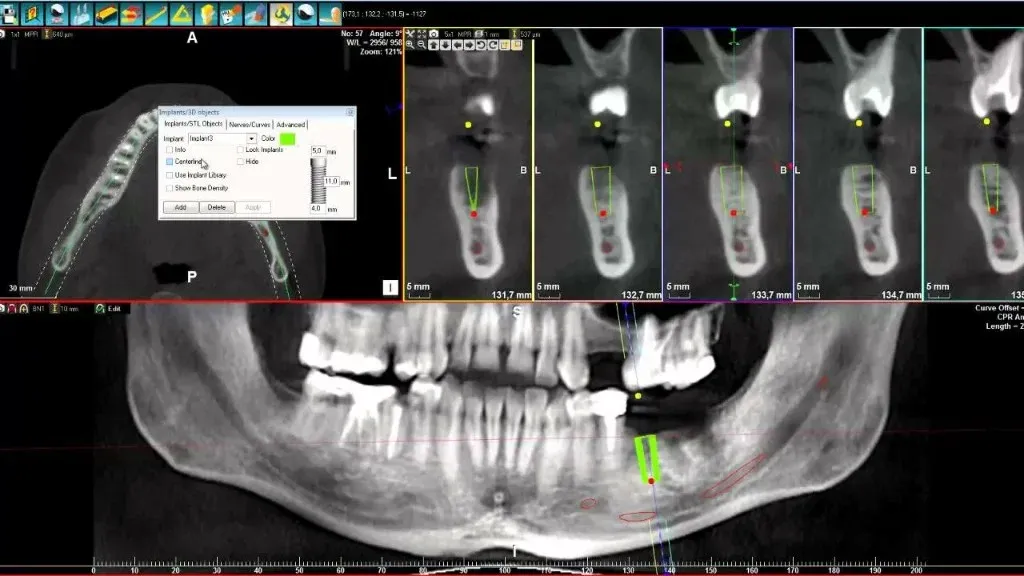
Technician reviewing an edentulous arch on CBCT beside the planned hybrid on screen

The Review

What We Review Before Proposing Anything

Bone volume and the anteroposterior spread, the sinus floor and the inferior alveolar canal, available restorative space against the opposing arch, soft-tissue thickness, and the lip line and smile display that set where the transition line can sit. An edentulous arch with no prosthetic reference is a conversation before it is a plan.

  • Prosthetic space: The most common surprise — a plan that works in bone but leaves no vertical room for a durable hybrid.

  • Anteroposterior spread: The AP spread and cantilever length come next, followed by a bone reduction that can shift the transition line into the smile.
Learn more
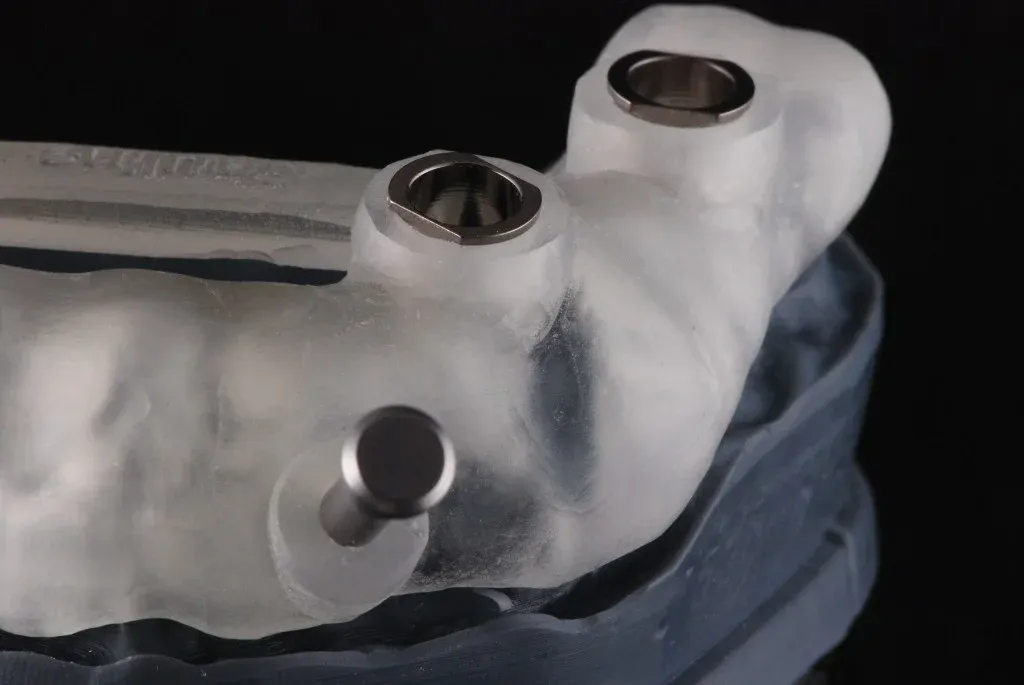
Printed surgical guide with guide sleeves seated on a full-arch stone model beside the hybrid provisional

Guided Surgery

From Approved Plan to Guide, Reduction and Provisional

Once you approve the implant positions and the bone reduction, we design and print the surgical guide, plan the alveoloplasty to the transition line, and prepare the conversion or immediate provisional alongside it — so surgery and prosthetics are one coordinated case.

Every component is checked against the plan before it ships, and the final hybrid is built from the same record the surgery was planned on.

  • Bone reduction: The alveoloplasty is planned to the transition line the lip will hide, not decided in the operatory.

  • The conversion: For immediate load, the provisional and the surgical plan are produced together so the conversion goes smoothly on the day.

Learn more

Where the plan usually changes

Prosthetic space is the most common surprise — a plan that works in bone but leaves no vertical room for a durable hybrid. The anteroposterior spread and cantilever length come next, followed by a bone reduction that shifts the transition line into the smile. For single-tooth and smaller cases, the same process runs through implant case planning.

The Process

How a Full-Arch Case Is Planned

Five steps between the practice and the lab. Nothing is produced until you approve the plan.

  1. You send the records

    Practice

    A CBCT (DICOM), intraoral or denture scans, a bite or existing prosthesis, and photographs. Tell us the implant system, whether the plan is for one arch or both, and whether immediate load is on the table.

  2. We review the whole arch

    Lab

    Bone volume and the anteroposterior spread, the position of the sinus and the inferior alveolar canal, available prosthetic space, the opposing dentition, and the lip line and transition zone. Full-arch tolerances are tighter, so gaps in the records get raised the same day.

  3. Restoratively driven plan

    Lab

    We set the final hybrid prosthesis first, then position the implants, plan any bone reduction to the transition line, and confirm prosthetic space and screw access serve the restoration — not the other way around.

  4. You review and approve

    Practice

    You receive the proposed implant positions, bone reduction and prosthetic design with the rationale. Nothing is produced until you sign off, and changes at this stage cost a conversation.

  5. Guide and provisional produced

    Lab

    On approval we design and print the surgical guide, plan the bone reduction, and prepare the conversion or immediate provisional so the surgical and prosthetic phases line up on the day.

What planning the arch actually buys you

  • A prosthesis with room to exist

    Prosthetic space and the transition line are decided before surgery, so the hybrid has the height it needs and the finish line hides where the lip covers it.

  • Problems surfaced early

    Insufficient restorative space, an unfavorable anteroposterior spread, a bone reduction that changes the plan — full-arch surprises are expensive, so we raise them while they are still cheap.

  • One lab, surgery to prosthesis

    The team that plans the arch designs the guide, plans the bone reduction and builds the provisional and final hybrid. Nothing is lost in a handoff.

Start a case

Send one case. Keep the scanner.

Open a partner account and your first case moves with a shade record and our remake guarantee — if a unit does not seat, we redo it at no charge.

  • Free 3Shape TRIOS 6 scanner for active partners
  • Under-2% remake rate — remakes at no charge
  • One named technician you reach directly — no call center

Prefer to talk? +1 747-268-0808

No call center — you hear back from the lab, not a bot.

Full-Arch Planning FAQ

Full Arch Case Planning — Questions Dentists Ask

The prosthetic plan drives count and position within what bone and anatomy allow. We design the hybrid or conversion prosthesis first, then place virtual fixtures where screw access, spread, and AP spread support that prosthesis — not the other way around. Your surgical preferences matter, but they should not override inadequate prosthetic space.

CBCT in DICOM, intraoral or denture scans, bite or existing prosthesis, and the conversion design you intend to seat. Tell us implant system, platform, and whether both arches are in scope. A duplicate of a well-fitting denture is often the fastest way to show tooth position and vertical when the ridge scan is weak.

How to send a file

Decide it in planning when a hybrid needs vertical room or a level arch — reduction guides are derived from the same CBCT once the prosthetic target is set. Discovering insufficient space after implants are placed is the expensive path. See bone reduction guide design when the case needs a stacked guide sequence.

Bone reduction guides

We plan tooth position, flange extension, and screw access against the scan and CBCT, and flag when lip support or phonetics will fight the proposed line. That plan is what reduction level and implant angulation serve. Adjust on screen until the hybrid you intend can physically fit — not at the conversion appointment alone.

Use this service when you are restoring a full arch with hybrid or overdenture mechanics, immediate conversion, or stacked surgical guides. Single units and short bridges belong in implant case planning. If you are unsure which bucket fits, send the CBCT and prosthetic goal and we will route it.

Implant case planning

Partner Offer

A Free Intraoral Scanner for Partner Practices

Partner with Universal Dental Lab and we place a 3Shape TRIOS 6 Wireless in your operatory — free for the length of our partnership. Scan the prep, send it in seconds, and skip impressions entirely.