

Cast Partial Frameworks

Rigid CoCr frameworks for dental practices — surveyed, rest-supported, and cast or milled to seat passively and protect the abutments over years of wear.

When a partial has to last and protect the remaining teeth, rigidity is the whole argument. A cast metal framework transfers load through defined rests to sound abutments — for definitive distal-extension and long-span cases it remains the standard the alternatives are measured against.

Jahn De Khudikine, Founder · Universal Dental Lab
Jahn De Khudikine Founder · Universal Dental Lab

Why send it here

Your partial, surveyed and staged by one technician to a passive fit.

A practice's schedule lives or dies by the lab — I've watched one late case push back a whole day of chair time.

So I still know the cases moving through this lab, and I answer for how each one is made. Send a case here and it doesn't drop into a queue — it lands with me and one technician who carries it start to finish.

Start a case
Rigid CoCr
A rest-supported framework that transfers load to the abutments Cast by lost-wax or milled from a solid puck
Surveyed to seat
Path of insertion, guide planes and rest seats planned before fabrication Verified passive on the master model before teeth are set
Your technician
One person holds your case Reach them directly — no call-center queue
Free scanner
3Shape TRIOS 6 for partners Go fully digital at no cost

Material Comparison

Cast Metal, Flexible, or Acrylic?

The partial-denture decision usually comes down to rigidity, esthetics, and whether the case is definitive or interim. Pick the one the case needs — we make all of them.

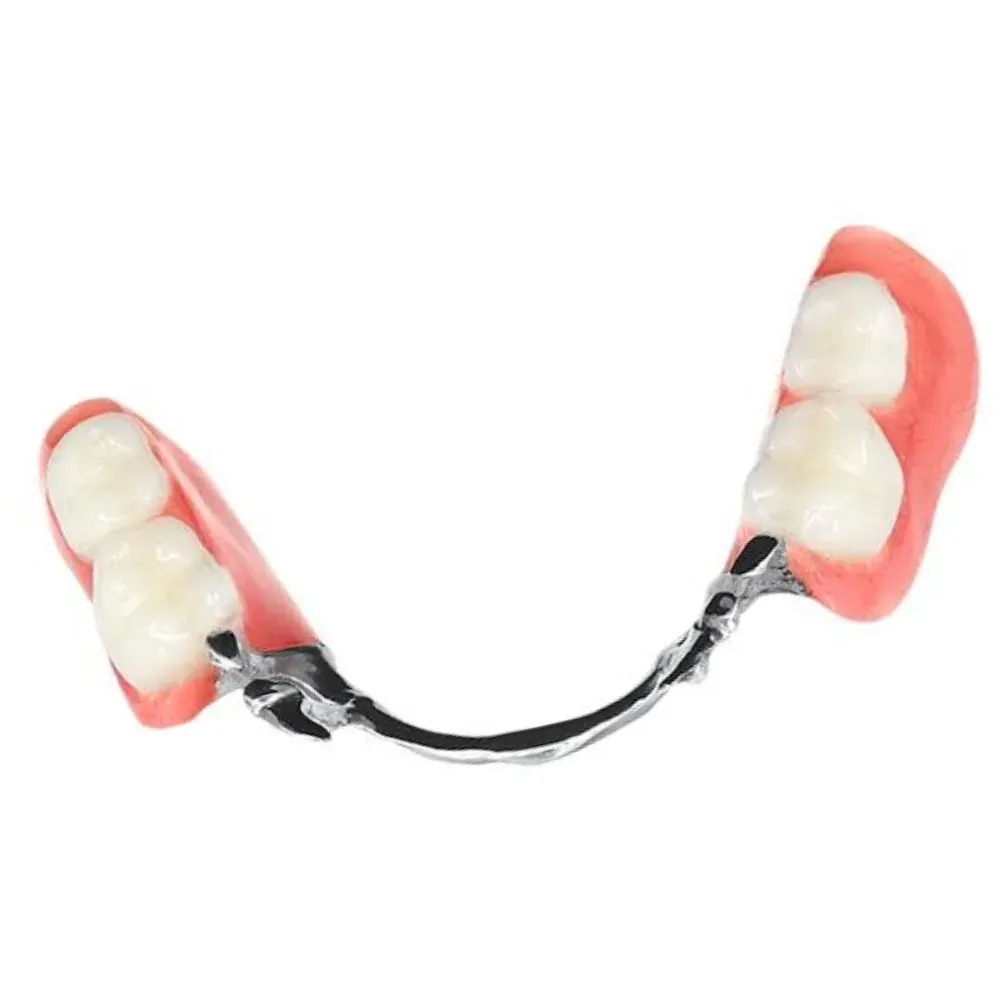
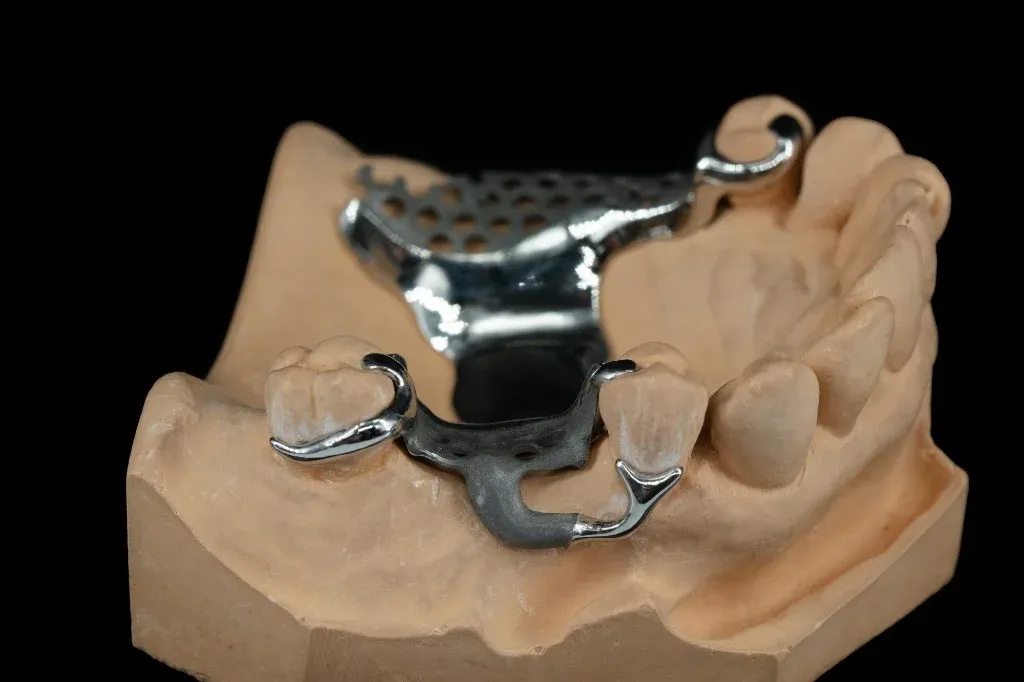
Cast cobalt-chromium partial framework on the master model
Cast Partial Frameworks You are here
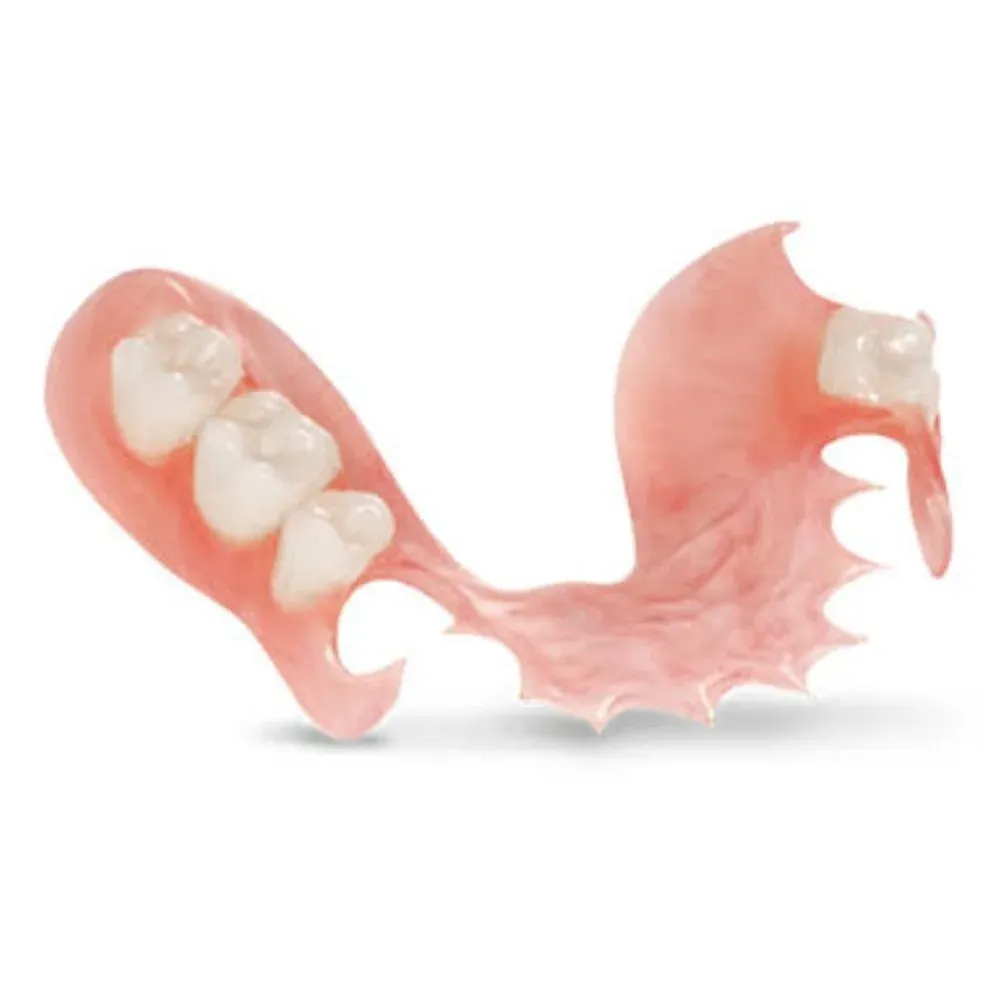
Printed flexible partial with tissue-toned clasps
Flexible 3D Partials
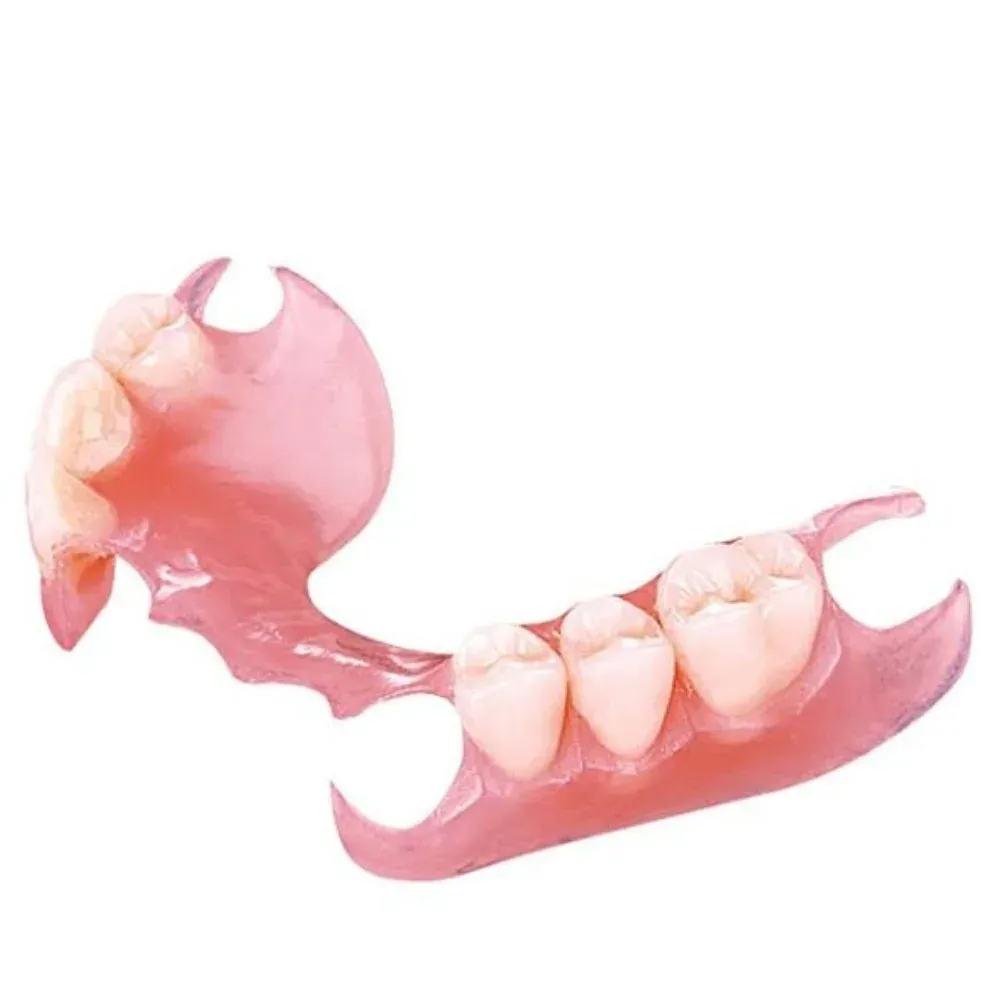
Valplast nylon partial with gum-colored clasps
Valplast Partials
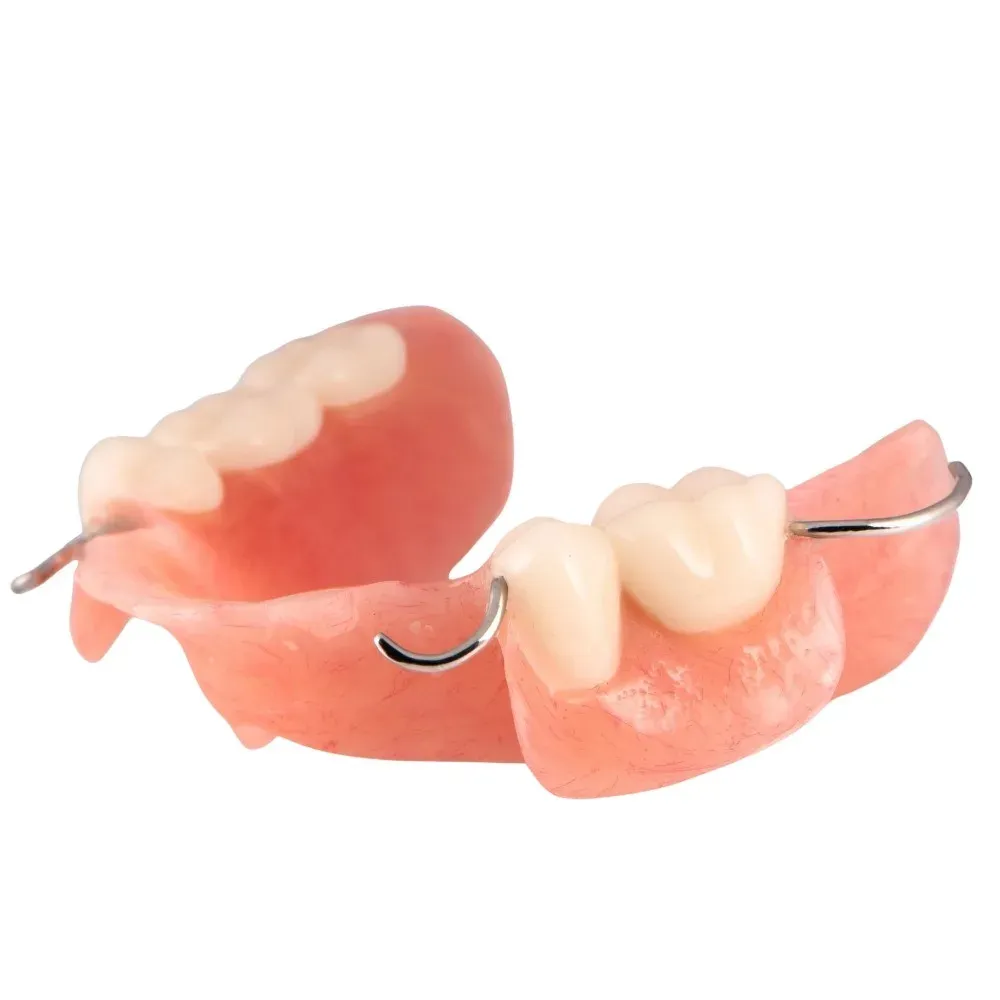
Acrylic partial base with wrought wire clasps
Acrylic Partials
Framework material Cast / milled CoCr alloy Printed flexible resin Flexible nylon Acrylic base + wire clasps
Rigidity & support Excellent rigid, rest-supported Good flexible, tissue-borne Good flexible, esthetic clasps Limited low rigidity
Best for Definitive partials, distal extension, long spans Metal-free esthetics, digital workflow Hiding metal in the esthetic zone Interim and transitional partials

Framework choice depends on the Kennedy classification, abutment condition, and esthetic demand of the specific case. Confirm the survey and design with the lab before you take the master impression.

Material
Cobalt-chromium (CoCr) alloy
Rigidity
High — rest-supported
Support
Tooth or tooth-tissue
Turnaround
Quoted per case at intake
Cast cobalt-chromium partial framework seated on the master model

Overview

The Rigid Foundation of a Definitive Partial

When a partial denture has to last and protect the remaining teeth, rigidity is the whole argument. A cast metal framework transfers occlusal load through defined rests to sound abutments — the thing a flexible base cannot do.

We fabricate cast partial frameworks in cobalt-chromium, cast by lost-wax from a surveyed design or milled from a solid CoCr puck when the workflow is fully digital. Either way the framework is engineered as one piece, around the abutments and the Kennedy classification of the arch.

That rigidity is what makes it the definitive choice for distal-extension cases and longer spans. The trade-off is display: a metal clasp can show in the esthetic zone, which is exactly where a flexible or Valplast partial earns its place instead.

  • Rest-supported: Rests transfer occlusal load to sound abutments; the connector stays passive and rigid under function.

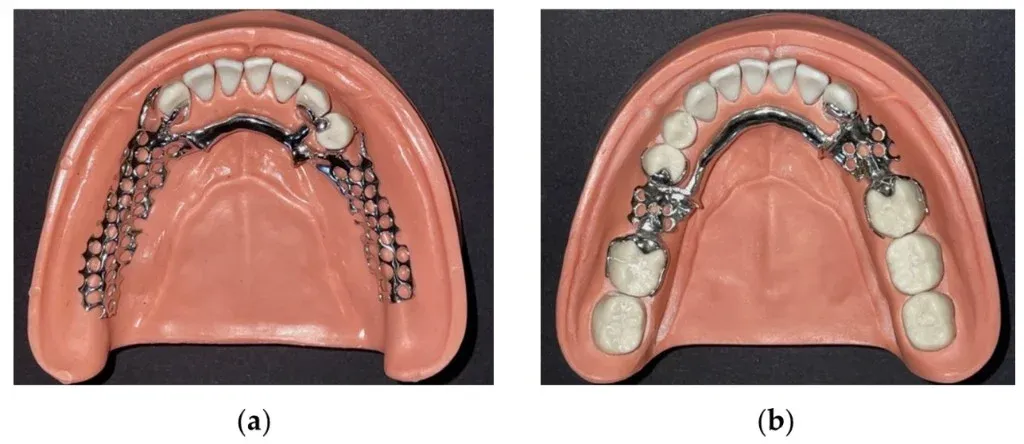
  • One casting: Rests, clasp assemblies, major and minor connectors, and retentive mesh designed and made as a single piece.
Learn more
A technician verifying a partial framework seats passively on the master model

At the Bench

Surveyed, Cast, and Fit to the Model

A cast partial is a staged case, and each stage is verified before the next one starts. Most framework remakes trace to an ambiguous survey or an impression that missed the rest seats — so we confirm the design before casting rather than after.

  • Survey the design: Path of insertion and undercuts are surveyed first — guide planes, rest seats, and clasp positions planned before anything is fabricated.

  • Cast or mill the framework: Cast in CoCr by lost-wax from the surveyed pattern, or milled from a solid puck when the workflow is fully digital.

  • Verify the fit on the model: Seated on the master model: rests in their seats, clasps engaging the planned undercut, the connector passive.

  • Wax try-in, then processing: Teeth are set for the try-in appointment, and the acrylic is processed to the framework once you approve it.

Learn more
Cast partial framework on a Kennedy Class I mandibular arch, occlusal view A schematic arch missing both second premolars and molars. The framework spans the two edentulous saddles: occlusal rests and clasp assemblies on the first premolars, a lingual bar as the major connector, minor connectors tying the bar into each saddle, and retentive mesh over the edentulous spans. 1 2 3 4 5
Occlusal view, mandibular Kennedy Class I. Schematic — clasp design and rest placement are planned per case.

Framework Anatomy

What We Actually Design Into the Casting

Every element below is planned against your survey before the framework is made. Get one of them wrong and the partial either will not seat or will not last.

  1. Occlusal rests. Seated in prepared rest seats, they direct occlusal load down the long axis of the abutment instead of into the tissue.

  2. Clasp assembly. A retentive arm engaging the planned undercut, reciprocated on the opposite surface so the tooth is not torqued on insertion.

  3. Major connector. The lingual bar that joins both sides into one rigid unit — the element that makes the partial cross-arch stable.

  4. Minor connectors. The struts that tie the rests, clasps, and saddles back to the major connector.

  5. Retentive mesh. Open latticework over the edentulous span that locks the acrylic and denture teeth to the framework — and lets it be relined later.

Arch Classification

The Four Kennedy Classes

How the arch is classified decides whether the framework is carried by teeth alone or by teeth and tissue together — and that is the first thing we look at when your case arrives.

  • Kennedy Class I: Bilateral edentulous areas posterior to the remaining natural teeth.

    Kennedy Class I

    Bilateral edentulous areas posterior to the remaining natural teeth.

    Tooth-tissue-supported

  • Kennedy Class II: A unilateral edentulous area posterior to the remaining natural teeth.

    Kennedy Class II

    A unilateral edentulous area posterior to the remaining natural teeth.

    Tooth-tissue-supported

  • Kennedy Class III: A unilateral edentulous area with natural teeth both anterior and posterior to it.

    Kennedy Class III

    A unilateral edentulous area with natural teeth both anterior and posterior to it.

    Tooth-supported

  • Kennedy Class IV: A single edentulous area crossing the midline, anterior to the remaining teeth.

    Kennedy Class IV

    A single edentulous area crossing the midline, anterior to the remaining teeth.

    Tooth-supported

Class I and Class II arches end in a distal extension — the saddle is carried partly by tissue that resorbs, so the framework has to stay rigid and the base has to stay relinable. That is the case cast metal is built for.

Before the master impression

Abutment selection, rest seat preparation, and clasp design change what you prepare in the mouth. Send a diagnostic scan first and we return a proposed survey and design to agree on before you commit the case.

Case Selection

When a Cast Framework Is the Right Call

Indicated for

  • Definitive partials where rigid support and abutment protection lead the case
  • Distal-extension (Kennedy Class I and II) arches that need cross-arch stabilization
  • Longer edentulous spans where a flexible base would flex under load
  • Cases with sound abutments that can carry rests and reciprocated clasps
  • Patients who will wear the partial long-term and need a repairable, relinable base

Consider an alternative when

  • A visible clasp in the esthetic zone is unacceptable — a flexible or Valplast partial hides metal
  • The case is a short-term or interim replacement — an acrylic partial or flipper fits better
  • The patient cannot tolerate any metal display and the span is small and well-supported
  • A metal-free requirement rules out a cast alloy framework

Specifications

Cast Partial Framework Specifications

Material, design, and record data for planning the partial chairside.

Typical parameters for the CoCr frameworks we cast and mill.
Material Cobalt-chromium (CoCr) alloy framework — cast by lost-wax, or milled from a solid puck for a fully digital workflow
Rigidity High — the defining property. A rigid framework distributes load through the rests to the abutments and resists deformation under function
Framework elements Rests, clasp assemblies, major and minor connectors, and retentive mesh for the acrylic and denture teeth, designed as one casting
Support Tooth-supported or tooth-tissue-supported depending on the Kennedy classification; rests transfer occlusal load to sound abutments
Design Surveyed for path of insertion and undercuts; guide planes, rest seats, and clasp positions planned before fabrication
Esthetics Metal clasps may show in the anterior; clasp position and design balance retention against display
Records Master impression or intraoral scan, opposing arch, bite registration, and a survey / design instruction
Restoration types Definitive removable partial dentures, maxillary and mandibular
Turnaround Quoted per case at intake

Framework design, clasp selection, and support depend on the Kennedy classification and abutment condition of the specific case. Confirm the survey and design with the lab before you take the master impression.

Case Submission

Sending a Cast Partial Case

We accept scans from all major intraoral systems, including iTero, 3Shape, and Medit — or a master impression, which many practices still prefer for partials.

Include with the case:

  • Master impression or STL of the arch and the opposing arch
  • Bite registration
  • The Kennedy classification and intended abutment teeth
  • A surveyed design or clasp and rest instructions
  • Shade for the denture teeth and any esthetic notes

An ambiguous survey or an impression that missed the rest seats is the most common cause of a framework that will not seat. If the design is unclear, we will propose one and confirm it with you. New to the lab? Open an account and we will walk you through the first case.

Start a case

Send one case. Keep the scanner.

Open a partner account and your first case moves with a shade record and our remake guarantee — if a unit does not seat, we redo it at no charge.

  • Free 3Shape TRIOS 6 scanner for active partners
  • Under-2% remake rate — remakes at no charge
  • One named technician you reach directly — no call center

Prefer to talk? +1 747-268-0808

No call center — you hear back from the lab, not a bot.

Cast Partial FAQ

Cast Partial Frameworks — Questions Dentists Ask

A clear survey, defined rest seats, and a record that captured the undercuts you plan to engage. We survey the design, verify the framework on the master model, and check that rests seat fully and clasps engage the planned undercut before acrylic and teeth are added. Ambiguous surveys and missed rest seats are what send frameworks back.

Send a master impression or scan of both arches, a bite, and a design instruction — ideally a surveyed design showing rests, clasps, and connectors. Tell us the Kennedy classification and which teeth are the abutments. Clear undercuts and defined rest seats in the record are what let the framework seat passively.

Both routes are available. We can cast by lost-wax from a printed pattern or mill from a CoCr puck, depending on the design and the case. The digital survey and design are reviewed before either path starts.

Framework fabrication and fit verification, then a wax try-in, then processing — so it typically runs longer than a single crown and may involve a try-in appointment. A complete, clearly surveyed record keeps each stage moving.

Yes — for partials it is especially worth it. Abutment selection, rest seat preparation, and clasp design change what you prepare in the mouth. Send a diagnostic scan and we will return a proposed survey to discuss before you commit the case.

How to send a file

Switching labs, de-risked

New to us? If the framework does not seat, we remake it at our cost when it is a lab error. We survey and verify the design with you before casting, so the first case starts from what will actually fit. See what the remake policy covers.

Partner Offer

A Free Intraoral Scanner for Partner Practices

Partner with Universal Dental Lab and we place a 3Shape TRIOS 6 Wireless in your operatory — free for the length of our partnership. Scan the prep, send it in seconds, and skip impressions entirely.