

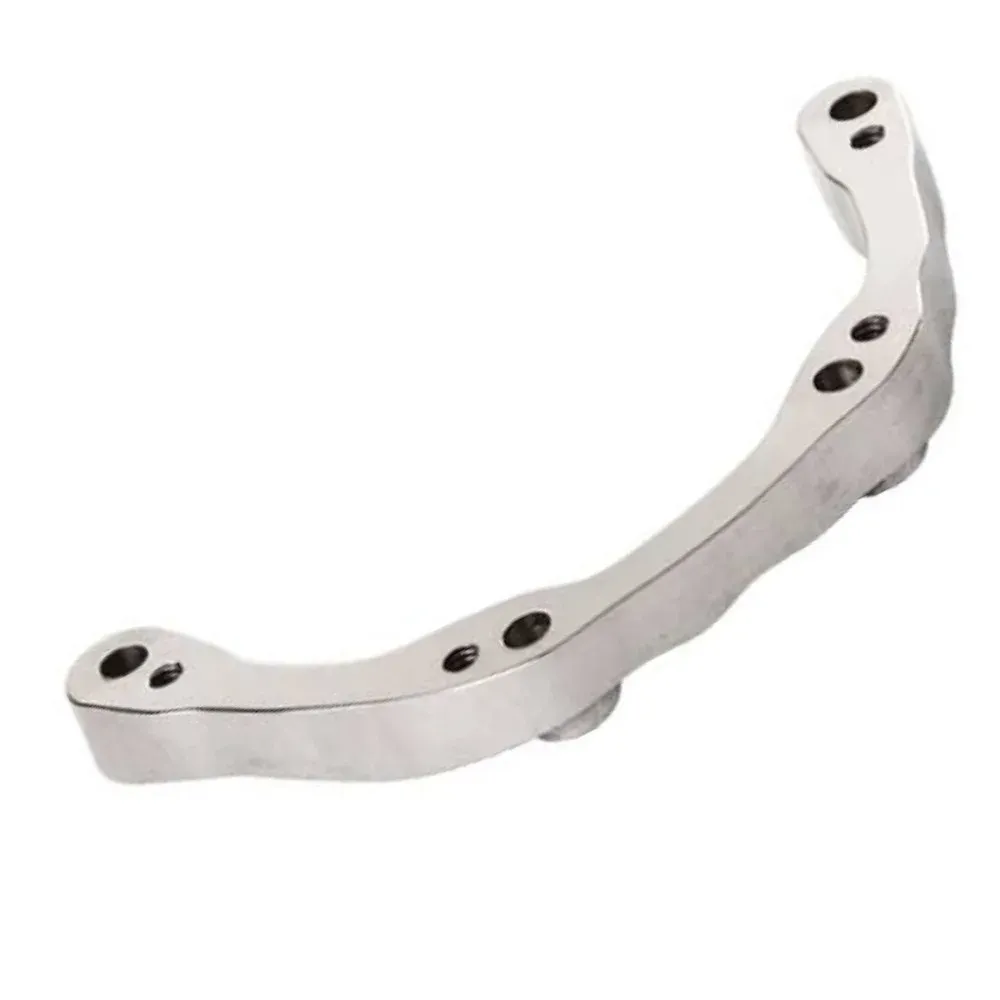
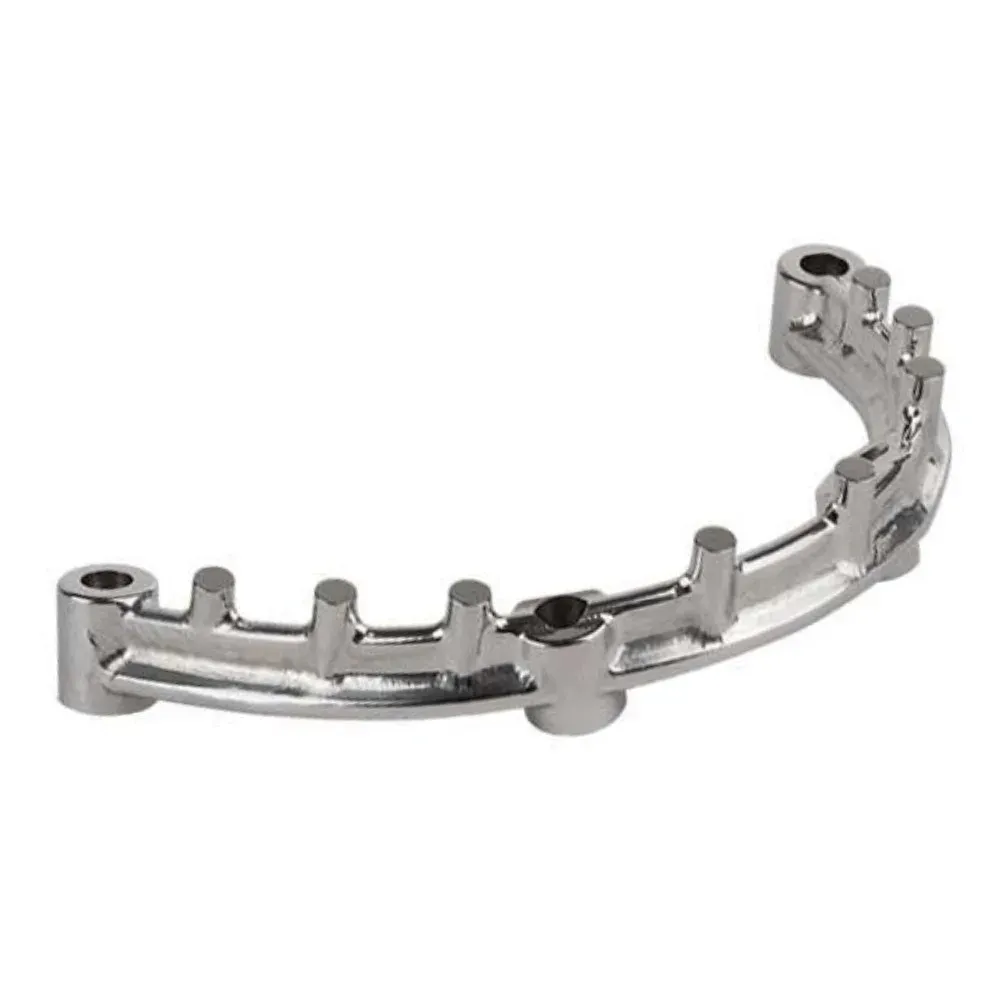
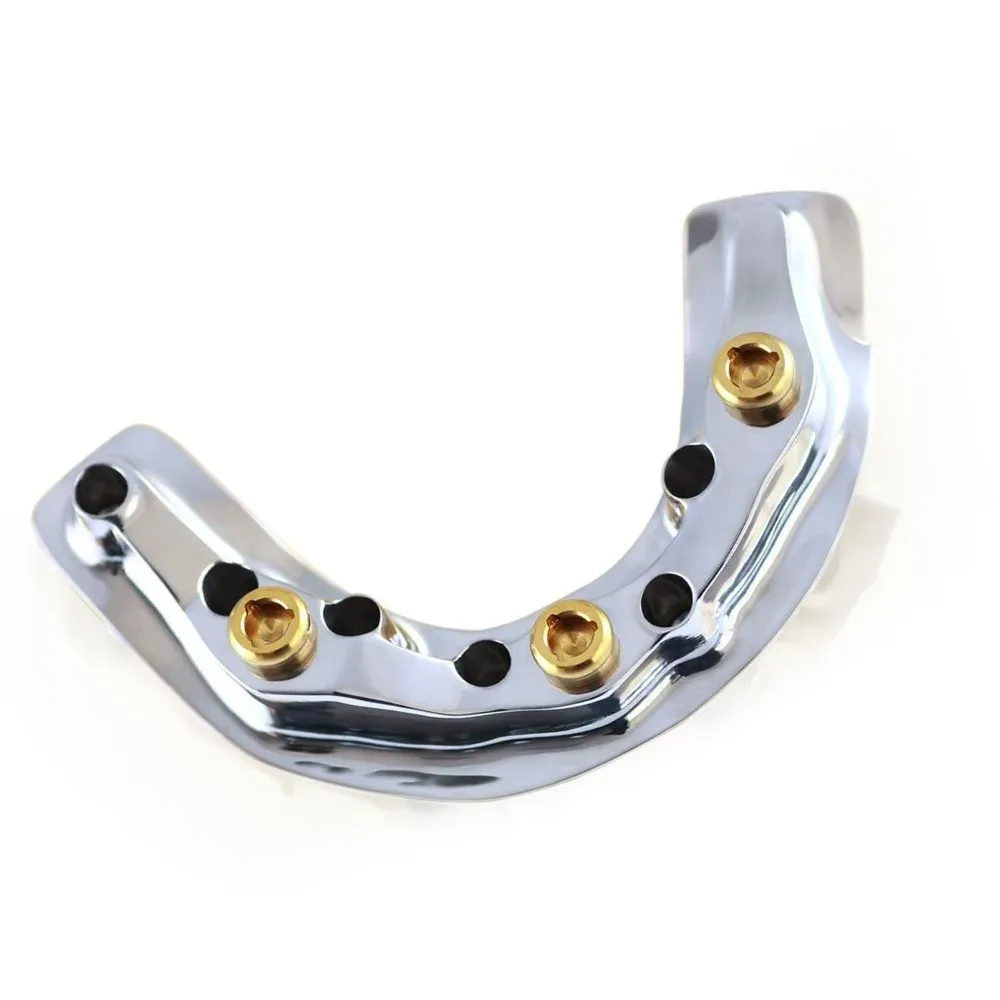
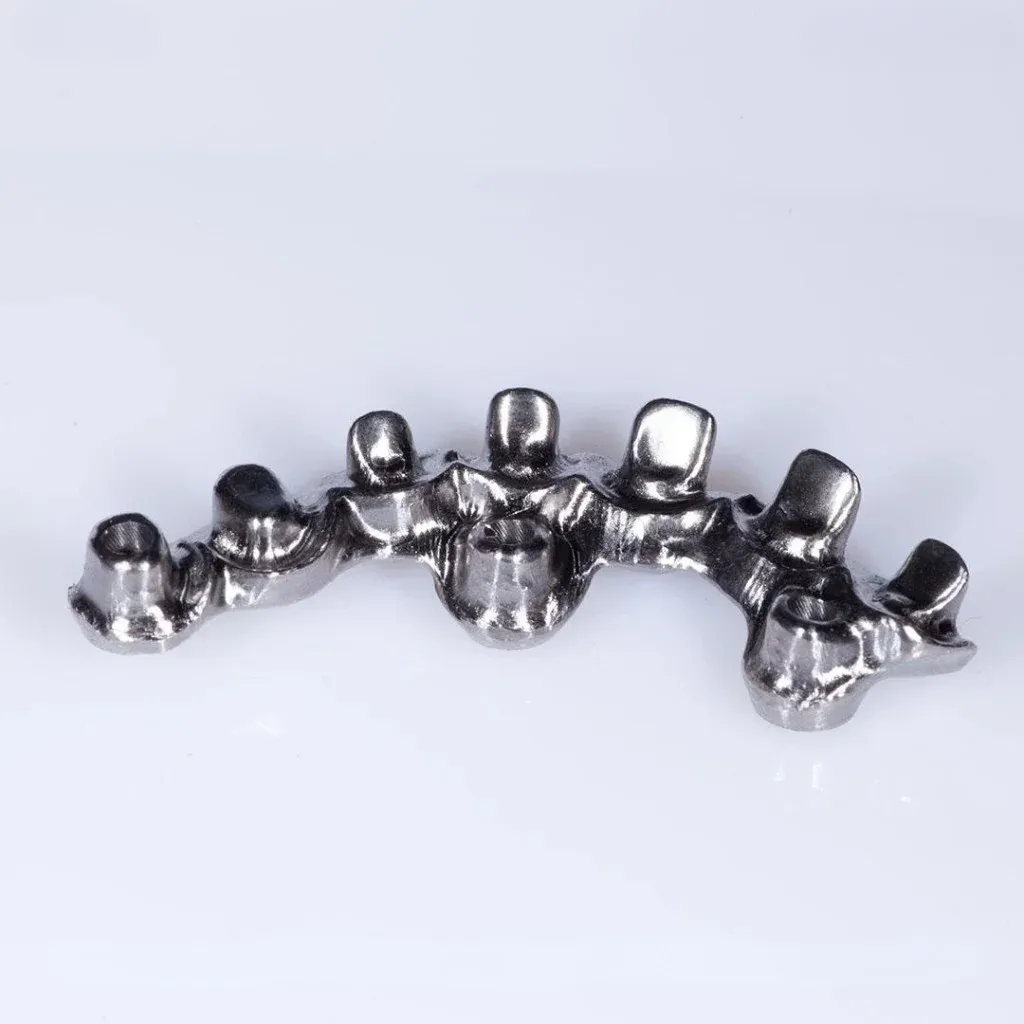
Milled Titanium Bars

Cut from one solid blank — no casting shrinkage, no solder joints, and nothing for the dentist to compensate for at the try-in.

Passive fit on a full arch is won in manufacturing, not at the chair. Milling removes the two stages that historically introduced distortion — the casting and the solder joint.

Jahn De Khudikine, Founder · Universal Dental Lab
Jahn De Khudikine Founder · Universal Dental Lab

Why send it here

Your full-arch framework, cut from one blank and checked implant by implant.

A practice's schedule lives or dies by the lab — I've watched one late case push back a whole day of chair time.

So I still know the cases moving through this lab, and I answer for how each one is made. Send a case here and it doesn't drop into a queue — it lands with me and one technician who carries it start to finish.

Start a case
One solid blank
Milled from solid titanium — no casting shrinkage, no solder joints to compensate for Passive fit is won in manufacturing, not at the chair
Screwed down singly
Seated on the master model and tightened one implant at a time before the prosthesis is processed If it does not sit passively at our bench, it does not ship
Your technician
One person holds your case Reach them directly — no call-center queue
Free scanner
3Shape TRIOS 6 for partners Go fully digital at no cost

Bar Comparison

Milled Titanium, Fixed, or Overdenture?

One milling process, three different prostheses. What changes is the design brief — so tell us which prosthesis the bar is carrying.

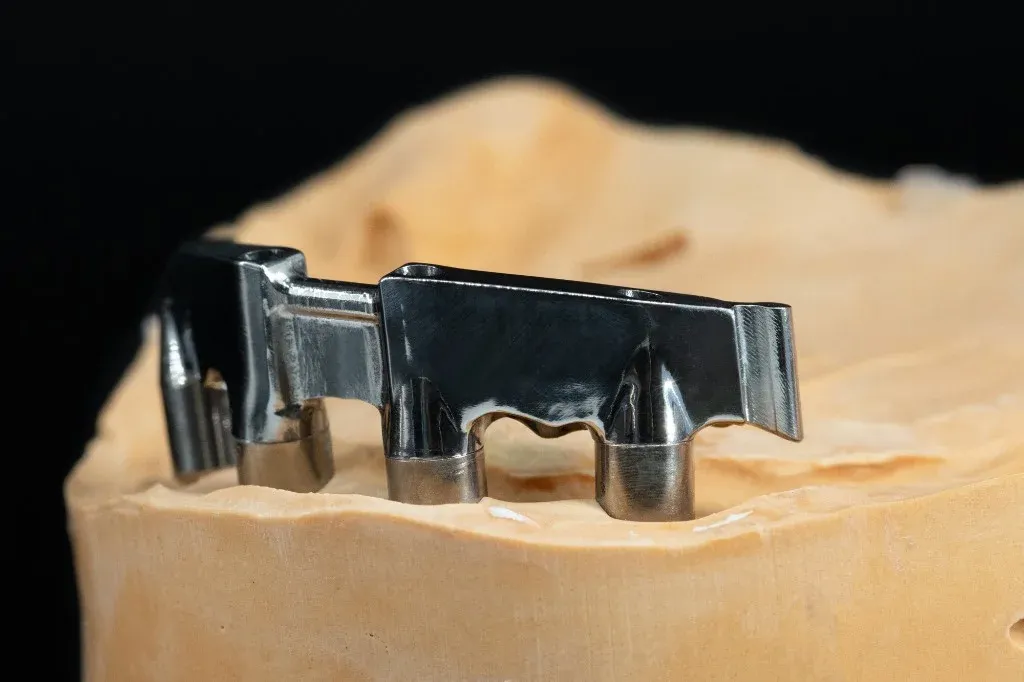
Milled titanium bar on the master model, screw channels visible
Milled Titanium Bars You are here
Fixed implant bar carrying a hybrid prosthesis
Fixed Implant Bars
Overdenture bar with clips and hygiene access beneath
Overdenture Bars
How it is made Cut from one solid blank — no casting, no soldering The same milled substructure, specified as a load-bearing framework Milled bar carrying clips or attachment housings
Fit characteristics No casting shrinkage or solder-joint distortion to compensate for Rigid splinting across fixtures; cantilevers designed to the A-P spread Retention and stability for a prosthesis the patient removes nightly
Best for Full-arch frameworks where passive fit governs the case Fixed prostheses the patient does not remove Implant overdentures with hygiene access under the bar

All three come off the same mill from the same titanium blank; the material and the method do not change. The axes above compare design intent, not one product's quality against another — the right bar is the one that matches the prosthesis. Bar cross-section, cantilever length and screw-channel correction are designed per case.

Material
Titanium and Ti-6Al-4V
Method
Subtractive CAD/CAM milling
Design
exocad, from your implant record
Turnaround
Quoted per case at intake
A solid titanium blank alongside the milled bar cut from it

Overview

Milled Titanium Bars — the Method Decides the Fit

A cast framework goes through burnout, investment and casting shrinkage before anyone sees it on a model. On longer spans it may then be sectioned and soldered back together. Each stage moves the metal a little. Splint five or six fixtures and those small errors stop being small.

Milling takes the stages out. We design the bar in exocad against your verified implant record and the approved tooth setup, then cut it from a solid titanium blank. What comes off the mill is what was drawn — the bench work that follows is verification and finishing, not correction.

  • exocad design: Against your verified implant record and the approved tooth setup.

  • Cut from a solid blank: No casting shrinkage, no solder joints — what leaves the mill is what was drawn.

  • Titanium grades: Commercially pure grades and Ti-6Al-4V, chosen by span and the prosthesis the bar carries.
Learn more
A bar screwed down on the master model, each connection checked for lift

At the Bench

Designed, Cut, Then Checked Implant by Implant

Design runs against your scan and the approved setup, so the bar is shaped around the prosthesis it has to carry rather than the other way around. Once it is milled, verification is mechanical and unforgiving.

If a bar does not sit passively at our bench, it does not go in a box. We would rather call you than ship something you have to section.

  • Seated and screwed down: On the master model, one implant at a time, watching every remaining connection for lift as each screw is tightened.

  • Screw-channel emergence: Confirmed against the approved setup before the prosthesis is processed.

  • Finish: Machined surfaces polished; anodizing on request.

Learn more

Before you mill

Full-arch frameworks fail at try-in for one reason more than any other: an implant record that was never verified. No milling method corrects an inaccurate impression — verify the record clinically before we cut.

Case Selection

When a Milled Titanium Bar Is the Right Call

Indicated for

  • Full-arch cases where a cast or soldered framework has already failed a passive-fit check
  • Implant overdentures needing a rigid, splinted substructure across four or more fixtures
  • Fixed hybrid prostheses where the bar carries acrylic and denture teeth
  • Arches with divergent fixtures that need screw channels corrected in design
  • Cases where the implant record has been verified and you want the framework machined, not cast

Consider an alternative when

  • A single implant is being restored — a custom abutment and crown is the simpler answer
  • Restorative space is too shallow for a bar plus prosthetic material, and the plan needs revisiting first
  • The implant record has not been verified — no milling method corrects an inaccurate impression
  • A monolithic zirconia full-arch is the intent, where framework and teeth are one piece

Specifications

Milled Titanium Bar Specifications

Material, machining and connection data for planning a full-arch framework.

Typical specifications for the titanium implant bars we mill.
Material Titanium and titanium alloy — commercially pure grades and Ti-6Al-4V, selected by span and prosthesis
Manufacturing method Subtractive CAD/CAM milling from a solid blank. No casting shrinkage, no solder joints
Design software exocad, driven by your verified implant record and the approved tooth setup
Implant connection Machined to the specific system and platform — send the system, platform diameter and any multi-unit abutment details
Screw channels Angle-corrected in design where fixture divergence would otherwise bring access through a facial surface
Superstructure Retains acrylic and denture teeth for a hybrid, or carries attachment housings for a removable overdenture
Fit verification Seated on the master model and screwed down one implant at a time before the prosthesis is processed
Finish Machined and polished; anodized on request
Turnaround Quoted per case at intake — full-arch frameworks are scheduled individually

Bar cross-section, cantilever length and screw-channel correction are designed per case against your implant record and the approved setup. Send the implant system and platform with the case — the connection is machined, not adjustable.

Case Submission

Sending a Milled Titanium Bar Case

We take implant-level digital records from iTero, 3Shape and Medit, and conventional impressions when a practice has not gone digital.

Send with the case:

  • Implant-level scan or impression, with scan bodies clearly captured
  • Opposing arch and a bite record
  • Implant system, platform diameter, and any multi-unit abutments already placed
  • The approved tooth setup, or a clear note on the prosthesis the bar will carry
  • CBCT or DICOM data when the case is being planned from the surgery forward

Full-arch frameworks fail at try-in for one reason more than any other: an implant record that was never verified. Milling does not rescue that. Incomplete component information is a close second — we cannot machine a connection nobody told us about. New to the lab? Open an account and we will walk the first arch through with you, or upload the files if you already have them.

Start a case

Send one case. Keep the scanner.

Open a partner account and your first case moves with a shade record and our remake guarantee — if a unit does not seat, we redo it at no charge.

  • Free 3Shape TRIOS 6 scanner for active partners
  • Under-2% remake rate — remakes at no charge
  • One named technician you reach directly — no call center

Prefer to talk? +1 747-268-0808

No call center — you hear back from the lab, not a bot.

Titanium Bar FAQ

Milled Titanium Bars — Questions Dentists Ask

Casting and soldering both move the metal — burnout, shrinkage, and on longer spans a sectioned joint put back together. Splinted across five or six fixtures, those small errors compound into a framework that rocks. Milling removes the stages entirely: the bar is cut from one solid blank against the CAD design, so the geometry that leaves the mill is the geometry that was drawn.

Send the implant system, the platform diameter and the restorative components in the mouth, including multi-unit abutments and their collar heights. The connection is machined to a specific geometry — there is no chairside workaround if the wrong platform is cut. If you are not certain what was placed, send the surgical report or the packaging labels and we will identify them before we design.

The milled bar is seated on the master model and screwed down one implant at a time, watching every remaining connection for lift as each screw is tightened. On full-arch cases we ask you to verify the implant record clinically before we mill, because no manufacturing method corrects an inaccurate impression.

Within limits. Angle-corrected screw channels bring access away from a facial surface and into the cingulum or the occlusal table, and angled multi-unit abutments extend that range further. The correction is not unlimited, and it is decided in design rather than at delivery. If you already know the fixtures are divergent, say so at intake so we can plan the channels with you.

The blank and the milling process are the same. The design is not. A fixed hybrid framework is contoured to retain acrylic and denture teeth; an overdenture bar carries clips and needs hygiene access underneath. Tell us at intake which prosthesis the bar is carrying — it changes the cross-section and the finish.

Switching labs, de-risked

New to us? If a bar does not sit passively at our bench, it does not ship — we would rather call you than send something you have to section. Verify the implant record, send the system details, and we build the first arch through with you.

Partner Offer

A Free Intraoral Scanner for Partner Practices

Partner with Universal Dental Lab and we place a 3Shape TRIOS 6 Wireless in your operatory — free for the length of our partnership. Scan the prep, send it in seconds, and skip impressions entirely.