

Talon Nightguard

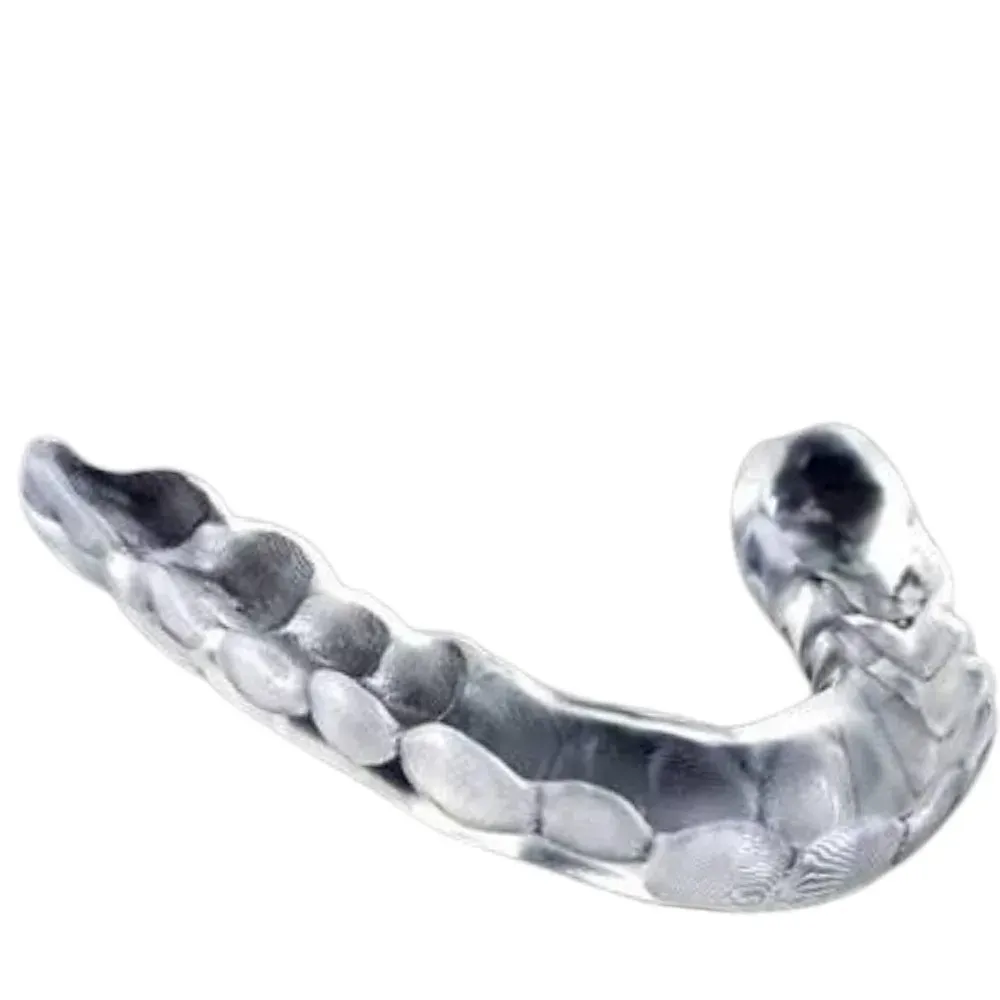
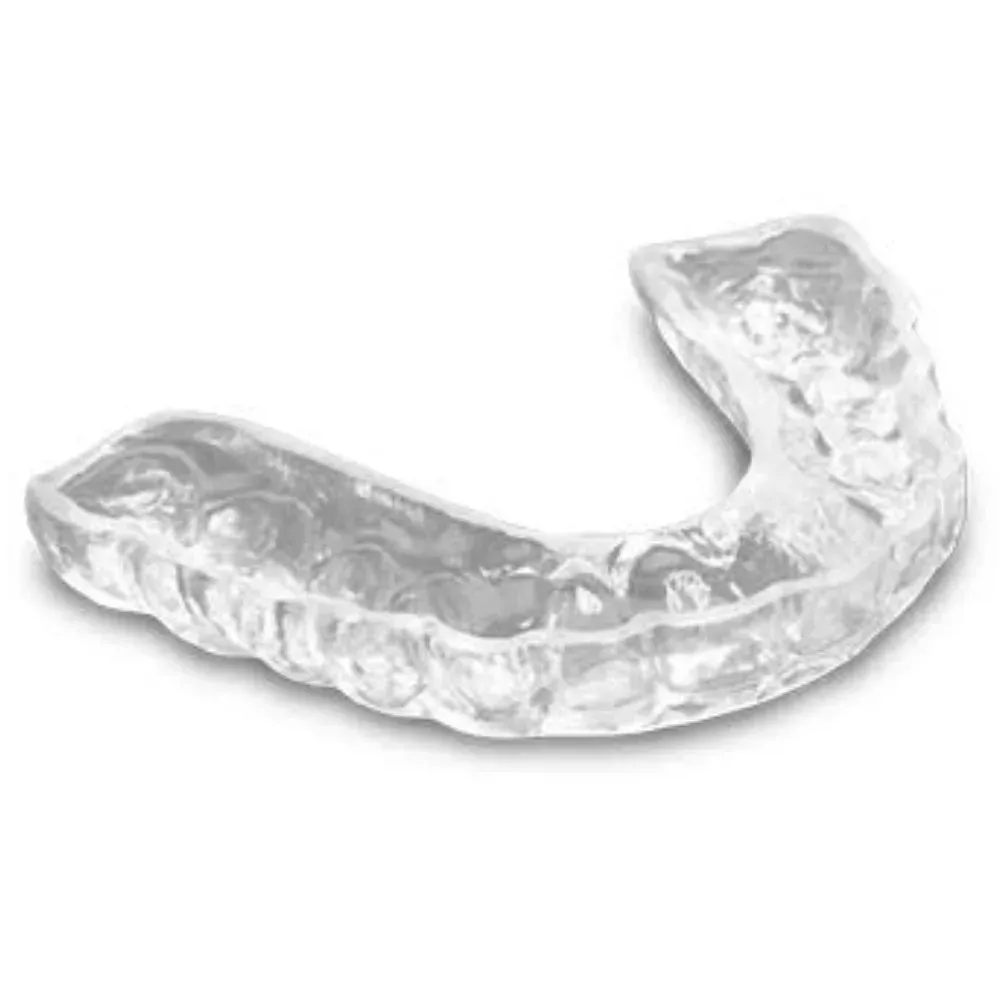
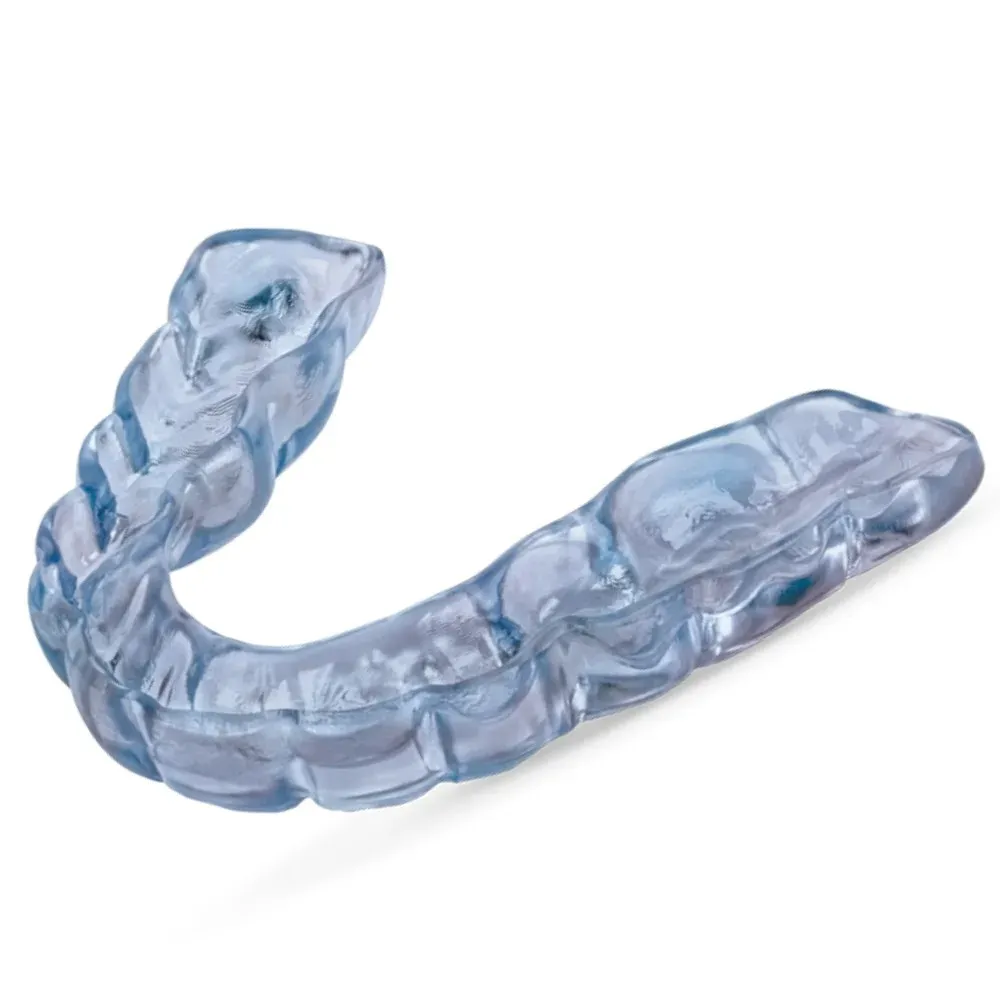
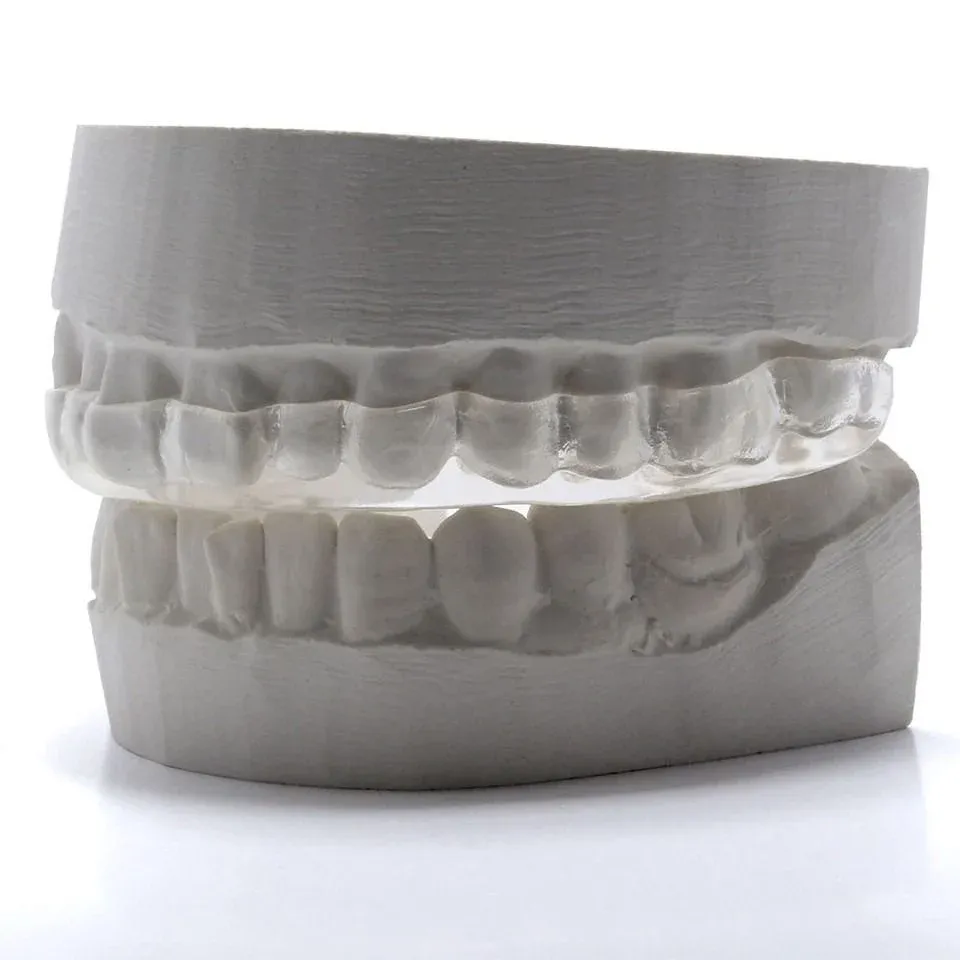
The occlusal nightguard dentists send after the last one failed. Hard, processed, and built to be repaired at the bench rather than replaced every time a destructive patient gets through it.

This is the guard you prescribe when the first one came back in pieces. Rigid through its thickness, with no laminate bond line to give up — and processed, so it can be serviced rather than thrown away.

Jahn De Khudikine, Founder · Universal Dental Lab
Jahn De Khudikine Founder · Universal Dental Lab

Why send it here

The guard that came back in pieces, carried by one technician who can fix it.

A practice's schedule lives or dies by the lab — I've watched one late case push back a whole day of chair time.

So I still know the cases moving through this lab, and I answer for how each one is made. Send a case here and it doesn't drop into a queue — it lands with me and one technician who carries it start to finish.

Start a case
Hard & processed
Rigid through its thickness — no laminate bond line to give up The most durable construction we make in this category
Serviceable
Adjusted, added to, relined and repaired in the same material A worn guard comes back to the bench, not the trash
Your technician
One person holds your case Reach them directly — no call-center queue
Free scanner
3Shape TRIOS 6 for partners Go fully digital at no cost

Three Ways to Give Out

Talon, Comfort H/S or Comfort3D?

Three appliances for the same night of grinding. How each one is built decides how it eventually gives out, and whether that is the end of it. We make all three.

Hard processed occlusal guard on the master model
Talon Nightguard You are here
Dual-laminate thermoformed guard, soft liner over rigid shell
Comfort H/S Nightguards
CAD-designed printed nightguard, wall thickness set in software
Comfort3D Nightguards
Construction Hard and processed. Rigid through its thickness, with nothing soft against the teeth Thermoformed dual laminate: soft resilient inner layer, rigid outer shell Designed in CAD and printed. Wall thickness is a value somebody set
How it fails It wears, and under enough force it can fracture. There are no layers to come apart Delamination at the margin, and a thickness that was a range from the day it was formed It cracks rather than separating, and an under-cured one can distort later
Repairable at the bench Yes adjusted, added to, relined and repaired in the same material No a separated laminate is replaced, not re-bonded No replaced rather than serviced; a saved design drives the replacement

Construction and mode of failure are the practical differences between these appliances — confirm the right choice for a specific patient with the lab before you take records.

Appliance
Hard, processed full-coverage guard
Coverage
Full arch, upper or lower
Serviceability
Repaired, relined, added to
Turnaround
Quoted per case at intake
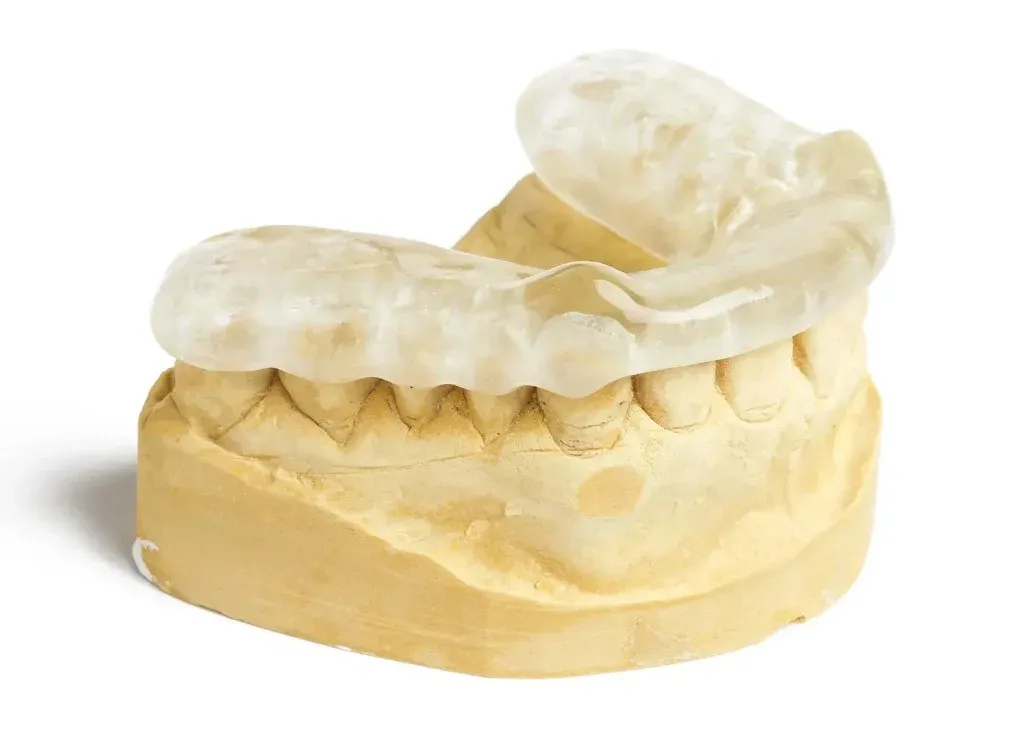
Hard processed nightguard seated on the articulated model

The Second Appliance

The Talon Nightguard Is the Second Appliance, Not the First

Most guards in this category are described as somebody's first appliance. This one is best understood as what you prescribe when the first appliance came back in pieces. A Talon nightguard is a hard, processed occlusal guard: rigid through its full thickness, with nothing soft between the plastic and the teeth. That single property decides everything a practice likes about it and everything a patient complains about.

Start with how the alternatives give out. A dual laminate fails at the bond line between two dissimilar layers. A thermoformed sheet fails where it thinned, and where it thinned is a byproduct of how the plastic stretched over the model rather than a number anyone chose. A hard processed appliance carries neither of those. There are no layers to come apart. It wears, and under sufficient force it can fracture, but it does not quietly separate at the margin.

  • No bond line: Rigid through its thickness — nothing dissimilar bonded together to let go at the margin.

  • Fails honestly: It wears and can fracture under load, but it does not quietly delaminate the way a laminate does.
Learn more
A technician relining the intaglio of a returned hard guard at the bench

Service and Repair

Built So It Can Be Fixed

Most appliances in this category are disposable by design. When a thermoformed guard cracks or a laminate lets go, there is no repair worth handing back to a patient, and everyone involved knows it. A processed appliance changes what happens the day the patient turns up with the guard in a plastic bag.

Send it back with one line about what happened to it. Where a repair would only fail again in the same place, we will say so and quote a remake instead, because a patched guard that breaks twice helps nobody.

  • Worn through: Material added back at the contacts, occlusion re-adjusted against the opposing model.

  • Fractured: Repaired in the same material, where the fracture line allows it.

  • Loose: Relined rather than remade after restorative work or recontouring.

Learn more

The honest cost

This is the bulkiest and least forgiving guard on our bench, and compliance is the real risk you take with it. If a patient has already told you they cannot get along with a hard guard, believe them and choose a different appliance.

Sending the Right Patient

The Patient Who Keeps Coming Back With a Broken Guard

Indicated for

  • Bruxers who have already cracked, chewed through or delaminated a previous appliance
  • Sustained heavy clenching where durability outranks comfort
  • Protecting extensive ceramic or implant restorative work from a patient who grinds
  • Patients where you would rather have an appliance serviced than rebuilt from scratch
  • A destructive patient with the compliance to actually wear a rigid guard

Consider an alternative when

  • Nothing has failed yet. For a first appliance, start with something the patient will tolerate
  • The patient has already refused a hard guard on comfort grounds
  • The case is splint therapy, deprogramming or TMD, where a prescribed occlusal scheme has to be built and held. That is a KeySplint
  • Interocclusal clearance is tight and thickness has to be controlled as a designed value
  • The patient has reacted to a conventional acrylic appliance and the material itself is the question

How It Is Built

Talon Nightguard Specifications

What the appliance is, what it costs the patient in comfort, and what happens the day it needs work.

How we build, finish and service a hard processed nightguard.
Appliance Hard, processed full-coverage occlusal guard. Rigid through its thickness, with no soft liner against the teeth
Material Processed in a hard splint material. If your protocol names a specific resin, put it on the RX and we will process that one
Coverage Full arch, upper or lower. Which arch is a clinical decision, and we will not assume it
What it is bought for Durability under sustained clenching and grinding, on a patient who has already gone through a softer or thinner appliance
Occlusal surface Refined against the opposing model at the bench, then polished. It cuts cleanly chairside with acrylic burs. Leave a cut surface unpolished and you have handed the patient an abrasive
Undercuts Blocked out at the model. A rigid appliance does not flex over the height of contour, so pronounced undercuts are planned for rather than engaged
Repair and reline Adjusted, added to, relined and repaired in the same material. A worn or damaged guard comes back to the bench, not into the trash
Known limitation Bulk and rigidity. The comfort cost is real, and a guard the patient will not wear protects nothing
Bench time More than a thermoformed guard takes. Processing is where the durability comes from
Records needed Both arches, scanned or impressed, plus a bite registration
Turnaround Quoted per case at intake

If your practice has a preferred hard splint material, name it on the RX and we will process that one. Unnamed, we use ours.

What We Need

Sending a Talon Nightguard Case

Records are records, and yours will be fine. What we cannot guess is the history of the appliance this one is replacing, and that history is what shapes the guard.

Send us:

  • Scans or impressions of both arches
  • A bite registration
  • Which arch carries the guard
  • What the previous appliance was, and how it failed: chewed, cracked, worn through, delaminated
  • Anything restorative you are about to do on this arch
  • Whether this patient has ever refused a hard appliance before

That fourth item is the one that changes what we build. A guard worn through at the canines and a guard that separated at the margin are two different failures, and they do not point to the same appliance. Where a patient has destroyed several in a row, send the case through complex case review before you take records rather than after. And one trap that catches more practices than it should: a guard built over an arch about to receive a new crown will not seat over the new crown. Restore first, or tell us what is coming. New to the lab? Open an account and we will walk you through the first case.

Start a case

Send one case. Keep the scanner.

Open a partner account and your first case moves with a shade record and our remake guarantee — if a unit does not seat, we redo it at no charge.

  • Free 3Shape TRIOS 6 scanner for active partners
  • Under-2% remake rate — remakes at no charge
  • One named technician you reach directly — no call center

Prefer to talk? +1 747-268-0808

No call center — you hear back from the lab, not a bot.

From the Bench

Hard Processed Guards: Questions From the Practice

It is usually the right next appliance, and it is not the whole answer. A hard processed guard is the most durable construction we make in this category, and when a patient does get through it, it can be repaired rather than replaced. What it will not do is change the force being generated at night. A nightguard protects teeth and restorations from parafunction; it does not treat the parafunction. If a patient is still wrecking appliances after a properly built hard guard, the next conversation is a diagnostic one rather than a question of material.

Repair is the first thing we look at. It is a processed appliance, so material can be added back to a worn occlusal surface, the intaglio can be relined when the fit has gone loose, and a fracture can often be repaired in the same material. Some fractures are not worth patching, and we will tell you which. Send it back with a note on what happened to it.

Some will not, and it is better to find that out before you take records. Rigid at insertion, rigid against the tissue, with none of the give a laminate or a resilient printed guard offers on night one. Compliance outranks durability. The most indestructible guard we can build is worth exactly nothing on the nights it is not in the mouth. If a patient has already told you they cannot get along with a hard guard, believe them and choose a different appliance.

Whether the case is a build or a rescue. A new guard runs on the records: both arches, a bite we can articulate, the arch named. An appliance sent back for service runs on a decision instead — repair it, reline it, or tell you it will only break in the same place and quote a remake. That decision gets made by somebody with the guard in hand, and it is not one to rush. Ask for the date on the day you send it; a repair and a new build are not the same case.

Both are hard, and both protect the dentition. The difference is what you are buying. A KeySplint is chosen because a prescribed occlusal scheme has to survive between appointments, which is the work of splint therapy, deprogramming and TMD management. A Talon nightguard is chosen because the patient destroys appliances and you want one that lasts and can be serviced. Therapeutic case, read the KeySplint page. Protective case with a destructive patient, this is the appliance.

Switching labs, de-risked

New to us? Send it back with one line about what happened to it, and where a repair would only fail again in the same place we will say so and quote a remake instead. We keep the record for your practice, so the next case starts from what worked on the last.

Partner Offer

A Free Intraoral Scanner for Partner Practices

Partner with Universal Dental Lab and we place a 3Shape TRIOS 6 Wireless in your operatory — free for the length of our partnership. Scan the prep, send it in seconds, and skip impressions entirely.