
Denture Repairs

A denture repair dental lab for practices that need a fractured base, a broken tooth, or a failed weld line back fast — assessed before it is repaired, reinforced where it needs to be, and checked against the bite before it ships.

A cracked denture is chair time you did not schedule and a patient who wants it back today. We take the pressure off the operatory: send the prosthesis and its fragments, and the case is assessed, repaired in bonded acrylic, and returned seating and occluding the way it did before it broke.

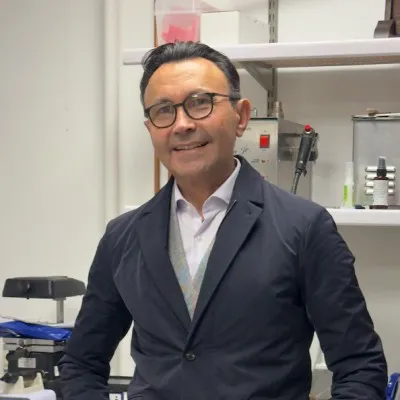
Jahn De Khudikine, Founder · Universal Dental Lab
Jahn De Khudikine Founder · Universal Dental Lab

Why send it here

A repair that fails again is worse than no repair. So we confirm it will hold before we start.

A practice's schedule lives or dies by the lab — I've watched one late case push back a whole day of chair time.

So I still know the cases moving through this lab, and I answer for how each one is made. Send a case here and it doesn't drop into a queue — it lands with me and one technician who carries it start to finish.

Start a case
Assessed before repaired
We confirm the repair will hold before we start A prosthesis past repair is flagged, not patched
Keyed and reprocessed
Fragments realigned and set in new acrylic Reinforced where the fracture pattern calls for it
Your technician
One person holds your case Reach them directly — no call-center queue
Free scanner
3Shape TRIOS 6 for partners Go fully digital at no cost
Universal Dental Lab Repair case sheet

What to send with a denture repair

  • The denture with every fracture fragment, unglued
  • Any broken, chipped or missing denture teeth
  • The opposing denture or cast where occlusion is involved
  • A bite registration when the fragments no longer seat cleanly
  • Mold and shade reference for tooth additions
  • A short note on how and when the fracture happened

The most useful thing you can send is every fragment, dry and unglued — a fragment reassembled with cyanoacrylate can no longer be keyed back into its correct position, and that is what governs the fit of the repair.

Before You Send It

What a Clean Repair Needs From the Practice

Broken denture repair lives or dies on the records that arrive with it. A repair reassembled from every original fragment fits; one approximated by hand does not. This is what to include so the prosthesis comes back right the first time.

Assessed before repaired
Every prosthesis is evaluated before any work starts: whether the fragments seat, whether the base has warped, whether a repeat fracture points to a fit problem a remake would solve better. If a repair will not hold, we tell you before we invest the case in it.
Reinforced, not just rejoined
A midline fracture that has recurred is not simply re-bonded. The repair site is prepared, keyed, and processed with new acrylic, and where the failure pattern calls for it we add metal mesh or fiber reinforcement so the same line does not open again.
Checked against the bite
A repair or tooth addition is verified against the opposing arch and the existing occlusion before it ships, so the prosthesis comes back seating and occluding the way it did before it broke — not a millimeter proud.
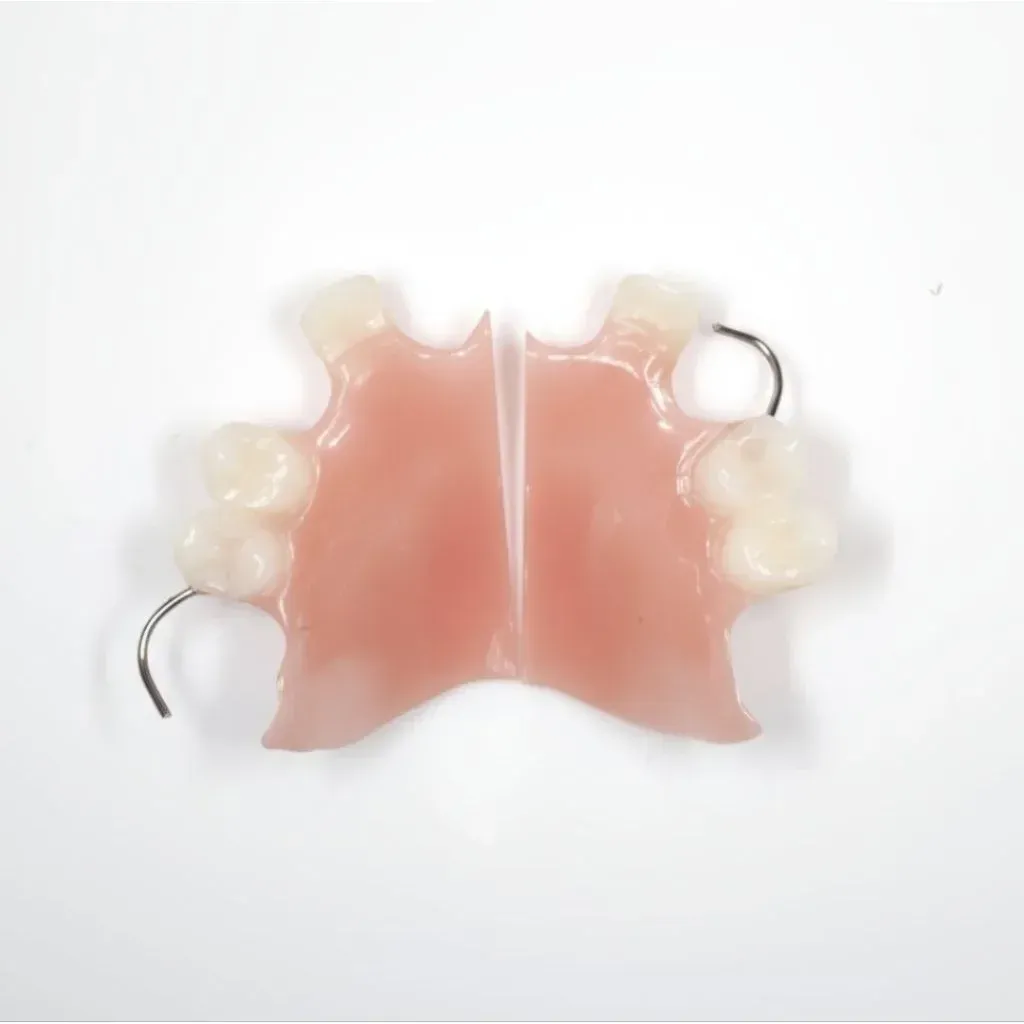
Technician seating denture fracture fragments together on the bench to check alignment before repair

Assessment First

Whether a Repair Is the Right Call

Not every broken denture is a repair. Before any acrylic is mixed, the technician checks how the fragments seat against one another, whether the base has warped or the fit has drifted, and whether a fracture that keeps returning to the same line is really telling you the prosthesis no longer fits. A denture that has fractured repeatedly, or one that was glued before it arrived, is often better served by a reline or a remake — and it is cheaper to learn that at intake than after the repair fails in the mouth.

  • Fragments and fit checked: The pieces are seated together dry to confirm they still key back into their original position before processing.

  • Repair versus remake: A warped base, a repeat fracture, or a poor tissue fit is flagged so you can decide between repair, reline, or replacement.
Learn more
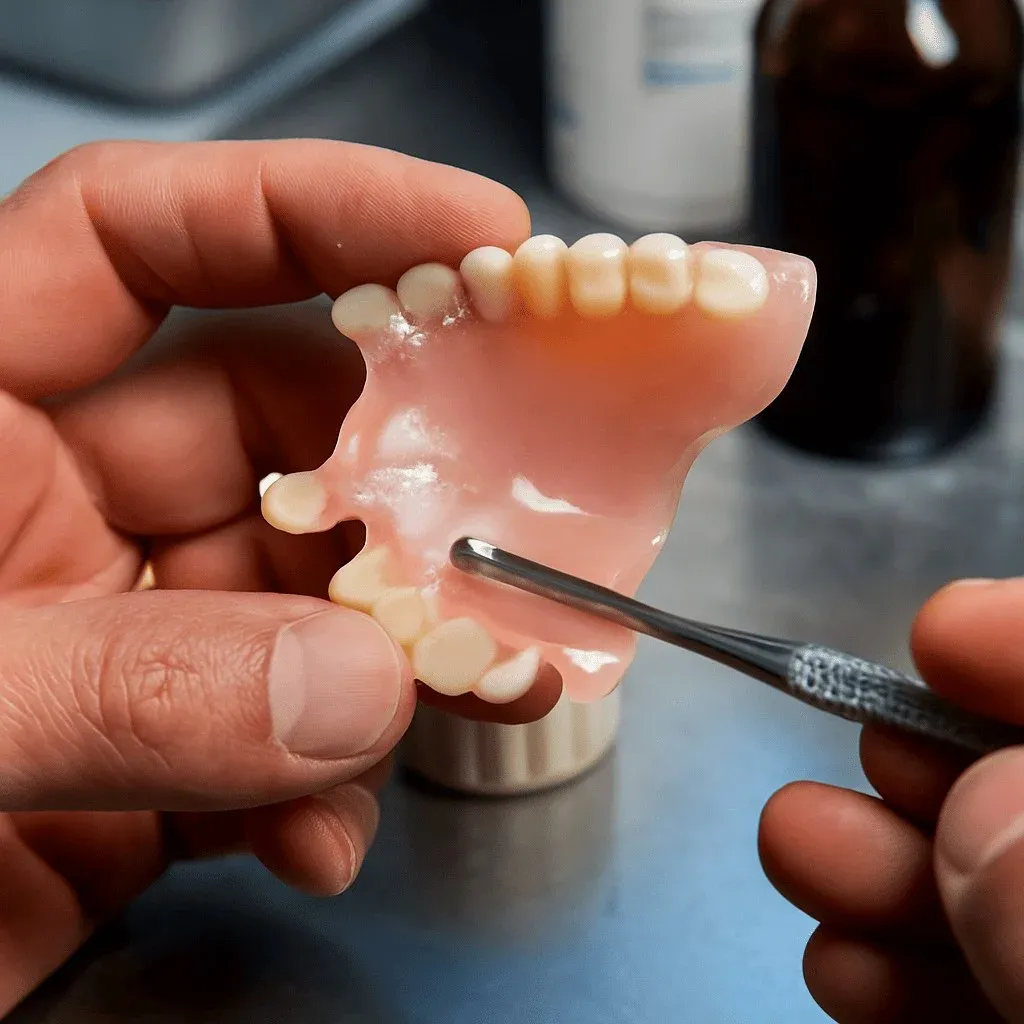
Metal mesh reinforcement positioned across a prepared denture base repair site before new acrylic is processed

Materials and Reinforcement

Acrylic That Bonds to the Original Base

Denture base repairs are processed in PMMA repair acrylic that chemically bonds to the existing base, so the joint is part of the prosthesis rather than a patch sitting on top of it. Added teeth are matched to the existing mold and shade and set into a prepared bed in the base, not surface-glued.

When a fracture keeps returning — a midline crack in a flexing upper, a denture opposing natural dentition — the repair is reinforced with a metal mesh or a fiber strand across the repair site, so the load that opened the crack the first time is carried rather than concentrated on the same weld line.

  • Bonded, not patched: Repair-grade PMMA is processed into a prepared site so the joint bonds to the original base rather than layering over it.

  • Reinforced against recurrence: Metal mesh or fiber reinforcement is added where the fracture pattern shows the base needs help carrying load.

Learn more

When a repair is not the answer

A denture that fractures at the same midline twice, a base that has warped, or one that no longer seats on the ridge is usually reporting a fit problem, not a strength problem — and another repair buys weeks, not months. In those cases a reline restores the tissue fit, or a fresh full denture resolves it for good. We call it at intake so you and the patient are not paying twice.

The Workflow

How a Denture Repair Moves Through the Lab

From damage assessment to final QC — five steps that put the judgment call at the front, where it is cheapest.

  1. Damage assessment and case intake

    Lab

    The prosthesis is examined before any repair begins: do the fragments seat, has the base warped, is the fracture at a line that has failed before. We confirm a repair will actually hold — and flag the cases where a reline or remake is the sounder answer.

  2. Reassembly and keying

    Lab

    The fragments are aligned in their original relationship and secured on a repair jig or cast, so the base returns to its pre-fracture form rather than being approximated by hand.

  3. Base and tooth reconstruction

    Lab

    The repair site is prepared and processed in PMMA repair acrylic that bonds to the existing base. Missing or broken teeth are matched to mold and shade and set into the base, and reinforcement is added where the fracture pattern calls for it.

  4. Finishing and polishing

    Lab

    The repair is contoured back to the original surface, the tissue side is left smooth and the flange thickness preserved, and the prosthesis is polished so the joint is not felt as a ridge by the patient.

  5. Fit, occlusion and final QC

    Lab

    The finished repair is checked for fit against the cast, for occlusion against the opposing arch, and for strength across the repair line before it ships back seating and occluding the way it did before the break.

What a proper denture repair buys the practice

  • Assessed before it is repaired

    The first check is whether a repair is even the right call. A warped or repeatedly fractured base is flagged for reline or remake before the case is committed to a patch that will fail again.

  • Bonded and reinforced

    Repairs are processed in acrylic that bonds to the original base, and reinforced with mesh or fiber where a recurring fracture shows the base needs help carrying load.

  • Returned to its original fit

    Every repair is verified against the cast and the opposing occlusion, so the prosthesis comes back seating and biting the way it did — not proud on the ridge or high in the bite.

Start a case

Send one case. Keep the scanner.

Open a partner account and your first case moves with a shade record and our remake guarantee — if a unit does not seat, we redo it at no charge.

  • Free 3Shape TRIOS 6 scanner for active partners
  • Under-2% remake rate — remakes at no charge
  • One named technician you reach directly — no call center

Prefer to talk? +1 747-268-0808

No call center — you hear back from the lab, not a bot.

Denture Repairs FAQ

Denture Repairs — Questions Dentists Ask

Cyanoacrylate or chairside glue holding fragments together. Once pieces are bonded out of position, we cannot key the fracture back to the original occlusion. Send every fragment dry and unglued, with the opposing denture or a bite when the pieces no longer seat on their own.

For a fractured base or broken teeth, the appliance itself is what we repair — it still ships to the lab in most cases. Scans help for opposing occlusion or when you are deciding repair versus reline versus remake. A digital opposing model lets us verify the bite after repair when you upload it with the case.

How to send a file

A clean single fracture with all fragments present is a straightforward repair. A denture that has fractured repeatedly at the same line, one with a warped or ill-fitting base, or one already reassembled with household glue is a different question — the fracture is often a symptom of a fit that has drifted, and a reline or remake will hold where another patch will not. We assess that at intake and tell you which path is sounder before committing the case, rather than returning a repair that fails again in weeks.

When the fracture pattern or occlusal load suggests the base will fail again along the same line — thin midlines, repeated breaks, or heavy occlusal tables. Reinforcement is part of making the repair survivable, not just closing a gap. We note on intake if simple repair is unlikely to last.

If the teeth and occlusal vertical are still serviceable but the base is loose, lean reline. If the base is broken but fit and teeth are sound, repair. If the denture has chronic fractures, collapsed VDO, or worn teeth, talk to the technician before you send it — many “repairs” are relines or remakes in disguise.

Denture relines

Partner Offer

A Free Intraoral Scanner for Partner Practices

Partner with Universal Dental Lab and we place a 3Shape TRIOS 6 Wireless in your operatory — free for the length of our partnership. Scan the prep, send it in seconds, and skip impressions entirely.