

Acetal Resin Partials

Tooth-colored clasps with more backbone than nylon — a semi-rigid, metal-free option for dentists, or acetal clasps on a cast framework when the case wants both esthetics and support.

Acetal resin sits between flexible nylon and cast metal: tooth-colored clasps that hide on a visible abutment, but firmer and more resilient than a soft thermoplastic. When neither extreme fits, it is often the middle ground the case needs.

Jahn De Khudikine, Founder · Universal Dental Lab
Jahn De Khudikine Founder · Universal Dental Lab

Why send it here

An acetal clasp that shines through the tissue was shaded wrong. We match it in the survey pass.

A practice's schedule lives or dies by the lab — I've watched one late case push back a whole day of chair time.

So I still know the cases moving through this lab, and I answer for how each one is made. Send a case here and it doesn't drop into a queue — it lands with me and one technician who carries it start to finish.

Start a case
Tooth-colored clasps
Acetal clasps blend against the abutment — no metal shows on a visible clasping tooth Firmer and more resilient than flexible nylon
Surveyed + shaded
Undercuts surveyed for retention, clasps shaded to the clasping abutment Fit and occlusion checked on the model before it ships
Your technician
One person holds your case Reach them directly — no call-center queue
Free scanner
3Shape TRIOS 6 for partners Go fully digital at no cost

Material Comparison

Acetal, Valplast, or Cast Metal?

Semi-rigid metal-free versus soft flexible versus rigid cast. We make all three — and combine them where the case wants both support and esthetics.

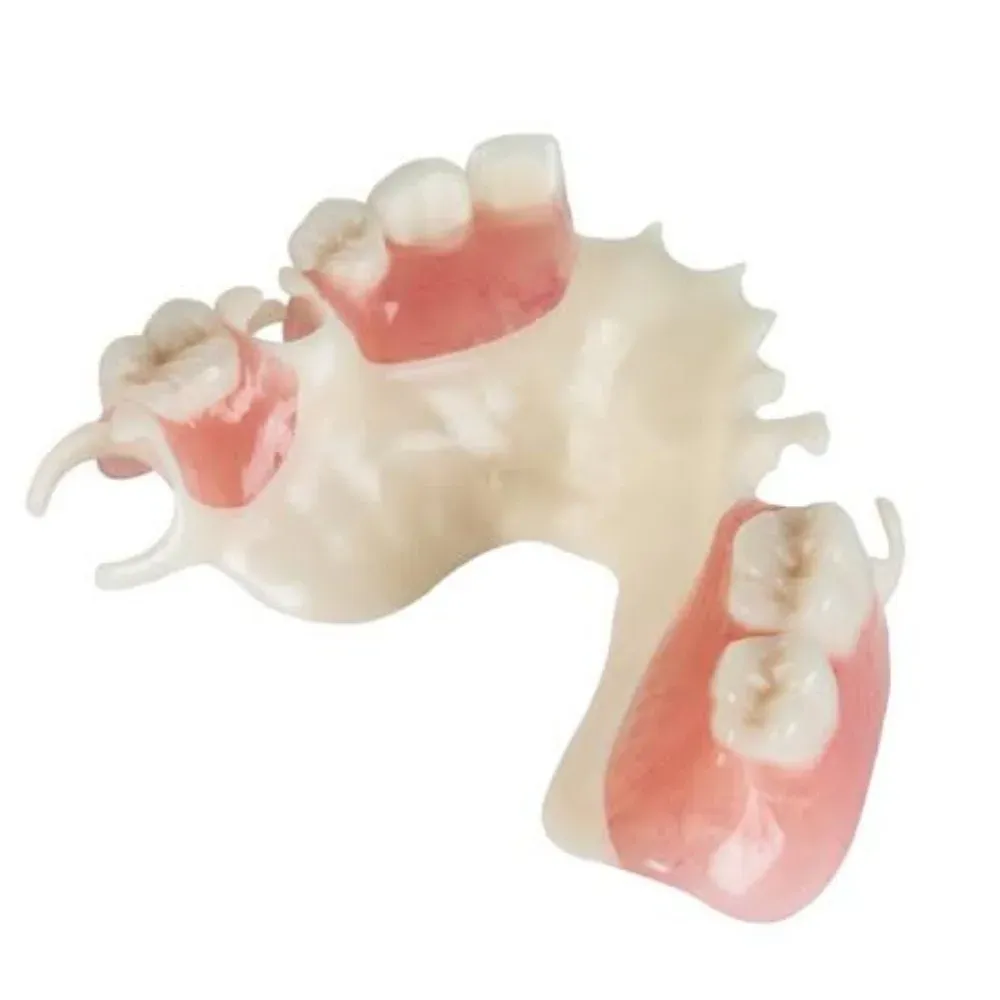
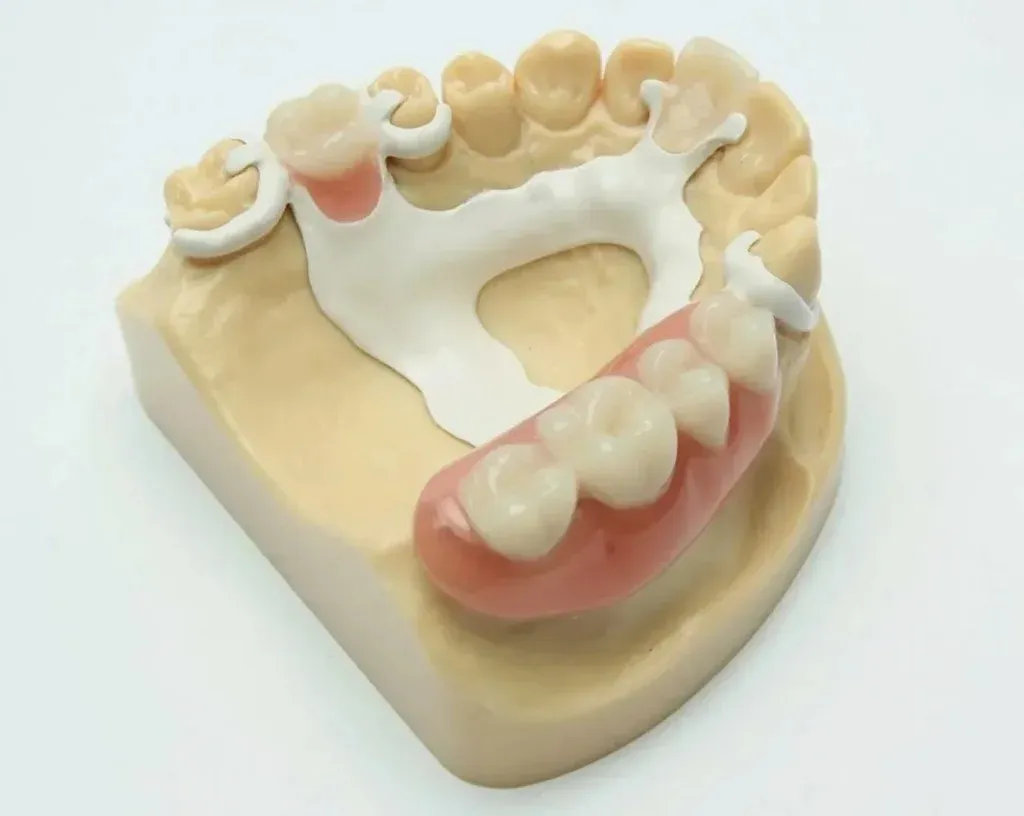
Acetal resin partial with tooth-colored clasps on the master model
Acetal Resin Partials You are here
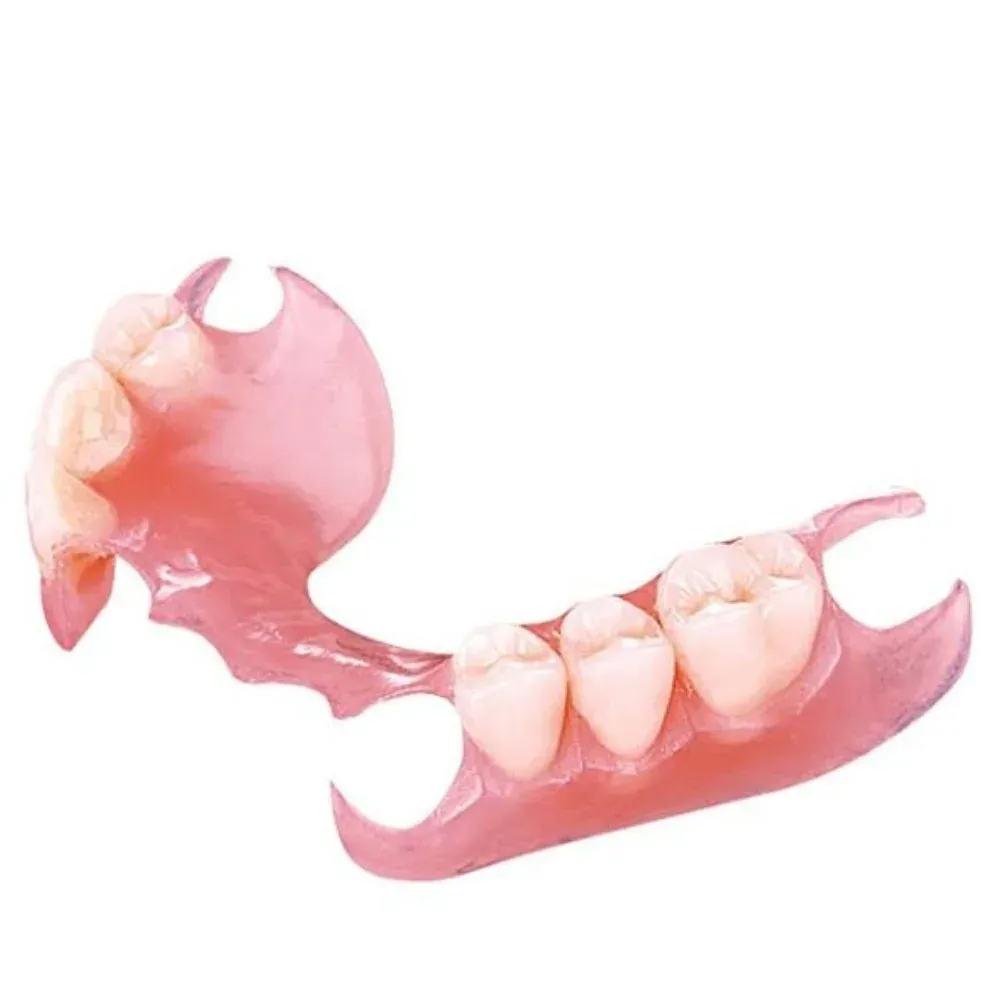
Injected nylon Valplast partial with tissue-toned base
Valplast Partials
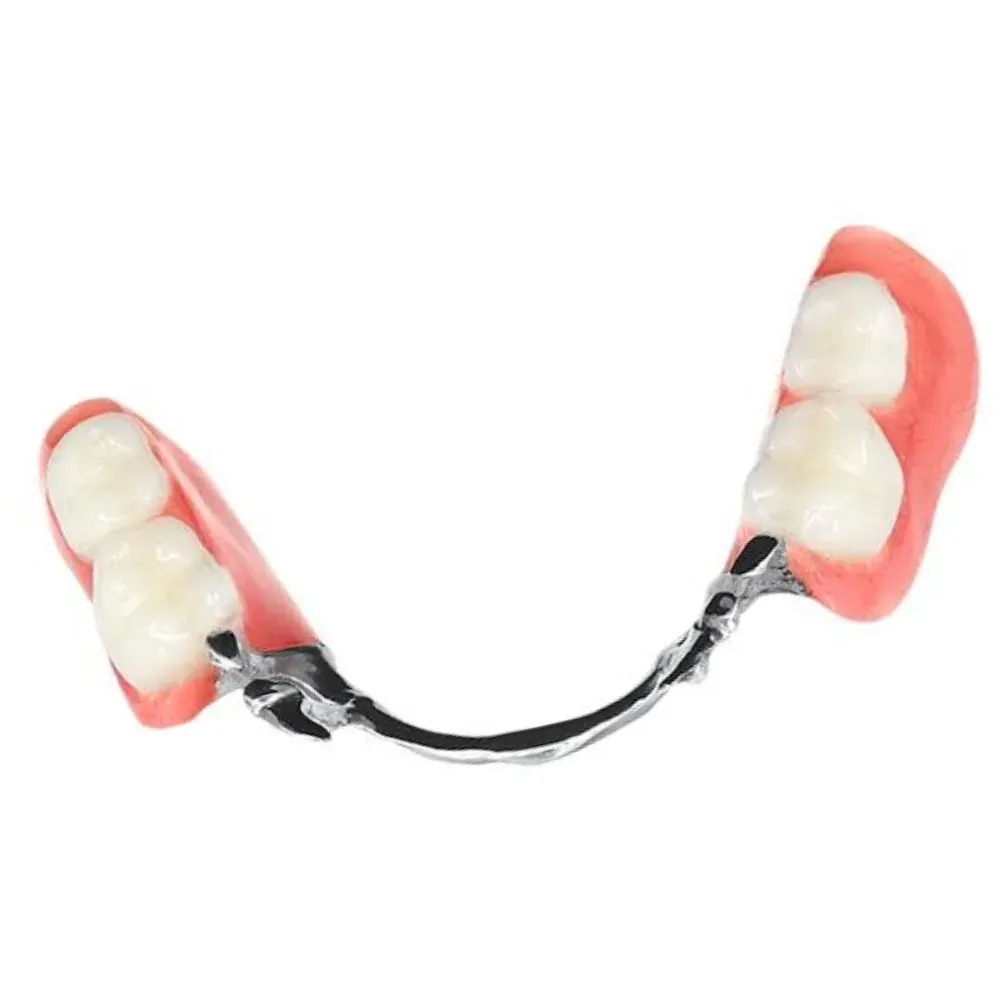
Cast CoCr partial framework on the model
Cast Partial Frameworks
Framework material Acetal (POM) resin Injected nylon (polyamide) Cast / milled CoCr
Rigidity Moderate semi-rigid Limited flexible Excellent rigid, rest-supported
Best for Tooth-colored clasps, firmer metal-free Tissue-toned clasps, soft base Definitive support, distal extension

Acetal resin properties vary by brand and formulation, and suitability depends on the span, undercuts, and support of the specific case. Confirm the design with the lab before you take the master impression.

Material
Acetal resin (POM)
Rigidity
Semi-rigid
Clasps
Tooth-colored
Turnaround
Quoted per case at intake
Acetal resin partial with tooth-colored clasps on the master model

Overview

The Metal-Free Partial With a Firmer Clasp

Acetal resin sits between flexible nylon and cast metal. It gives you tooth-colored clasps that hide on a visible abutment, but with more rigidity and resilience than a soft thermoplastic — a useful middle ground when neither extreme fits the case.

We fabricate acetal resin partials in polyoxymethylene, a thermoplastic that resists deformation better than nylon while remaining entirely metal-free. Clasps engage undercuts with a firmer, springier action, and because they are tooth-colored, they blend against the clasping tooth rather than flashing metal in the smile.

  • Full acetal partial: A metal-free base with resilient clasps for a well-supported span.

  • Hybrid design: A cast framework carrying the load, with acetal clasps on the visible anterior abutments so no metal shows where it matters.
Learn more
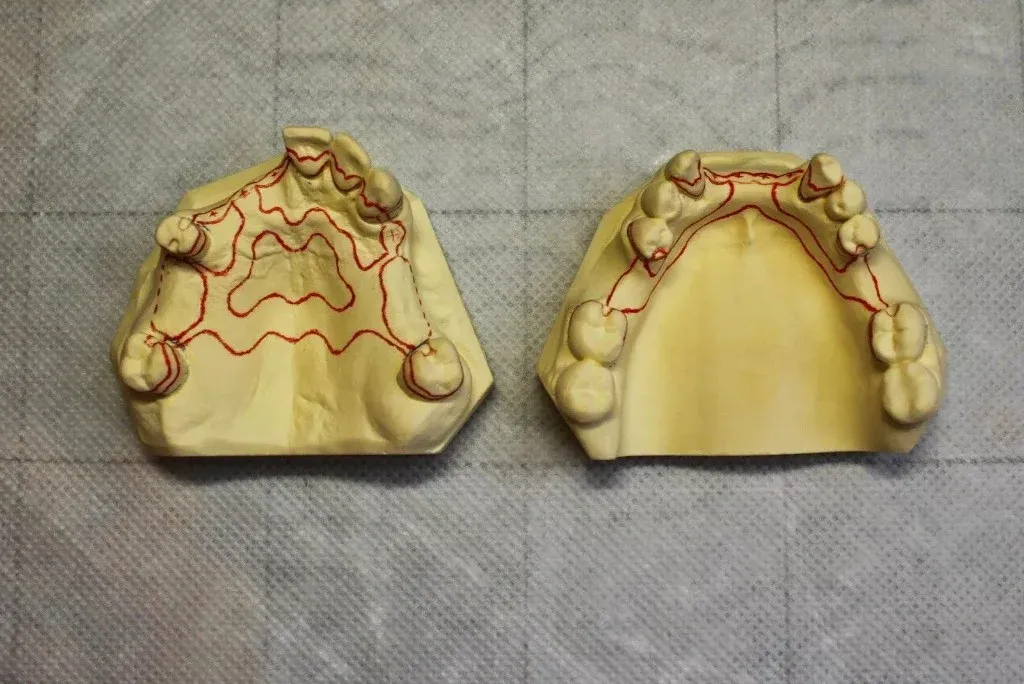
A technician surveying an acetal partial design for undercuts

At the Bench

Clasps That Hide, a Base That Holds

The design is surveyed for undercuts and the acetal clasps are shaded to the clasping abutments so they disappear against the tooth. Fit, retention, and occlusion are checked on the model before the partial ships.

  • Clasps shaded to the abutment: Tooth-colored acetal blended to the clasping tooth, so no metal shows in the smile.

  • Undercuts surveyed: The design is surveyed for reliable retention before anything is fabricated.

  • Combination designs available: A cast framework can carry the load with acetal clasps on the esthetic abutments.

Learn more

Before you take the impression

Acetal clasps are tooth-colored, so they need a target to blend against — the abutment shade is the detail people forget. Send it with the case and the clasps disappear against the clasping tooth.

Case Selection

When Acetal Resin Is the Right Call

Indicated for

  • Metal-free partials that still need a firmer clasp than flexible nylon provides
  • Esthetic cases where a tooth-colored clasp on a visible abutment is the priority
  • Acetal clasps combined with a cast framework, replacing visible anterior metal clasps
  • Patients with sensitivities to certain denture-base metals or monomers
  • Well-supported spans where a semi-rigid base is adequate

Consider an alternative when

  • The case is a long distal extension needing true rigid, rest-borne support — a cast framework is indicated
  • Maximum flexibility and a soft tissue-toned base are wanted — Valplast or a printed flexible partial fits better
  • The case is short-term or transitional — an acrylic partial or flipper is more economical
  • Frequent chairside relines and additions are expected

Specifications

Acetal Resin Partial Specifications

Material, clasp, and record data for planning the partial chairside.

Typical parameters for the acetal partials and clasp assemblies we make.
Material Acetal resin (polyoxymethylene, POM) — a thermoplastic used for clasps and partial frameworks
Rigidity Semi-rigid — firmer and more resilient than flexible nylon, but not as rigid as a cast CoCr framework
Esthetics Tooth-colored clasps that blend against the abutment, so no metal shows on a visible clasping tooth
Common configurations A full acetal partial, or acetal clasps combined with a cast metal framework to hide visible anterior clasps
Clasp behavior Resilient clasps that engage undercuts; acetal resists deformation better than softer thermoplastics
Biocompatibility Metal-free and monomer-free, which suits patients with certain material sensitivities
Adjustment More workable than nylon, though less so than conventional acrylic — plan additions and relines accordingly
Records Master impression or intraoral scan, opposing arch, bite registration, shade, and a survey / design instruction
Restoration types Removable partial dentures and acetal clasp assemblies
Turnaround Quoted per case at intake

Acetal resin properties vary by brand and formulation, and suitability depends on the span, undercuts, and support of the specific case. Confirm the design with the lab before you take the master impression.

Case Submission

Sending an Acetal Resin Partial Case

We accept scans from all major intraoral systems, including iTero, 3Shape, and Medit — or a master impression, which many practices still prefer for partials.

Include with the case:

  • Master impression or STL of the arch and the opposing arch
  • Bite registration
  • Shade for the denture teeth — and for the clasping abutments
  • A surveyed design or clasp and rest instructions
  • Whether you want a full acetal partial or acetal clasps on a cast framework

The abutment shade is the detail people forget — acetal clasps are tooth-colored, so they need a target to blend against. New to the lab? Open an account and we will walk you through the first case.

Start a case

Send one case. Keep the scanner.

Open a partner account and your first case moves with a shade record and our remake guarantee — if a unit does not seat, we redo it at no charge.

  • Free 3Shape TRIOS 6 scanner for active partners
  • Under-2% remake rate — remakes at no charge
  • One named technician you reach directly — no call center

Prefer to talk? +1 747-268-0808

No call center — you hear back from the lab, not a bot.

Acetal Partial FAQ

Acetal Resin Partials — Questions Dentists Ask

Acetal sits between flexible nylon and rigid metal: tooth-colored clasps with more body than nylon, without a full metal framework. Use it when esthetic abutments matter but you still want semi-rigid clasp engagement. On a long distal extension that needs rest-borne support, a cast framework with acetal clasps — or full CoCr — is usually the sounder call.

A full acetal partial keeps the case metal-free and simpler. A hybrid — cast CoCr carrying the rests and major connector, acetal clasps on visible abutments — gives you rigid support and tooth-colored clasps. Send a diagnostic scan and we will propose which route fits the span.

Send a master impression or scan of both arches, a bite, and the shade — including the shade of the clasping abutments, since acetal clasps should blend against them. Include a survey or design instruction for clasps and rests. Clearly captured undercuts are what let the clasps engage.

Acetal is tougher in flexure than thin wrought wire in many esthetic clasp designs, but it is still a thermoplastic — heavy undercut engagement or a clasp forced into a poor path of insertion shortens its life. We review undercuts and path of insertion before fabricating rather than guessing.

Yes. The useful conversation is which of the three materials the case actually needs — and often the answer is a hybrid. Send a diagnostic scan and we will propose a design before you take the master impression.

How to send a file

Switching labs, de-risked

New to us? If the partial does not seat or the clasps miss, we remake it at our cost when it is a lab error. We keep your design and abutment shade on file, so the next case starts from what worked on the first. See what the remake policy covers.

Partner Offer

A Free Intraoral Scanner for Partner Practices

Partner with Universal Dental Lab and we place a 3Shape TRIOS 6 Wireless in your operatory — free for the length of our partnership. Scan the prep, send it in seconds, and skip impressions entirely.